The Simple Joy of this Authentic Pad See Yew with Shrimp
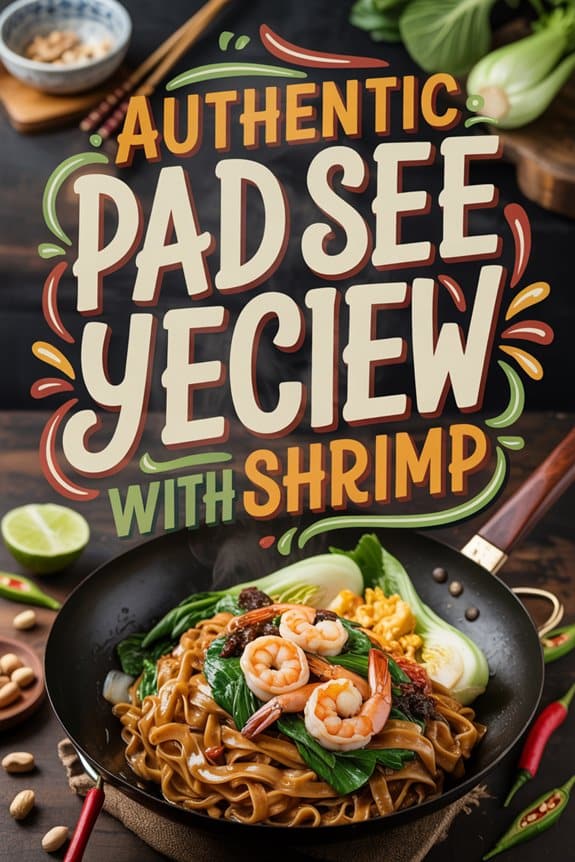
When you’re craving something that hits all the right notes—sweet, salty, umami-rich, and satisfying—this authentic pad see yew with shrimp delivers exactly what your taste buds are searching for.
I love how this dish transforms simple ingredients into pure comfort food magic. The wide rice noodles soak up that incredible sauce while maintaining their chewy texture, the shrimp adds protein perfection, and those slightly charred edges? Pure bliss.
It’s the kind of meal that makes you forget about takeout completely. Why order when you can create restaurant-quality Thai cuisine right in your own kitchen?
Ingredients
Let me tell you, gathering ingredients for authentic pad see yew is like assembling a flavor dream team—each component plays a vital role in creating that perfect balance of sweet, salty, and umami goodness.
The beauty of this dish lies in its simplicity, but don’t let that fool you into thinking any old substitutions will work. When I’m shopping for these ingredients, I always hit up my local Asian market because they’ll have the good stuff, the real deal that makes all the difference between “meh” noodles and “wow, I can’t believe I made this at home” noodles.
- 3 tablespoons Asian fish sauce
- 1 tablespoon miso or 1 tablespoon fermented yellow beans
- 1 tablespoon oyster sauce
- 4 teaspoons sugar
- 1/4 cup low sodium soy sauce
- 1 lb bok choy, cut into 2-inch pieces
- 2/3 lb dried rice noodles
- 1/4 cup plus 3 tablespoons vegetable oil
- 3/4 lb shelled and deveined medium shrimp
- Salt
- 4 large garlic cloves, minced
- 3 large eggs, beaten
- 3 Thai bird chiles or 3 serrano chilies, thinly sliced
- 2 tablespoons chopped roasted salted peanuts
- Lime wedges for serving
Now, here’s where things get interesting—and where I’ve learned some hard lessons about ingredient quality. That fish sauce isn’t just any fish sauce, it’s the backbone of your entire flavor profile, so spring for a good brand like Red Boat or Three Crabs.
The rice noodles should be the wide, flat kind, sometimes labeled as “pad thai noodles” or “rice sticks,” and they need to be dried, not fresh. If you can’t find fermented yellow beans, miso works beautifully as a substitute, adding that deep, funky umami punch that makes your taste buds do a little happy dance.
One last thing—don’t even think about skipping the Thai bird chiles if you can find them, because serrano chiles are fine in a pinch, but those tiny fire bombs bring an authentic heat that’ll transport you straight to Bangkok.
How to Make this Authentic Pad See Yew with Shrimp
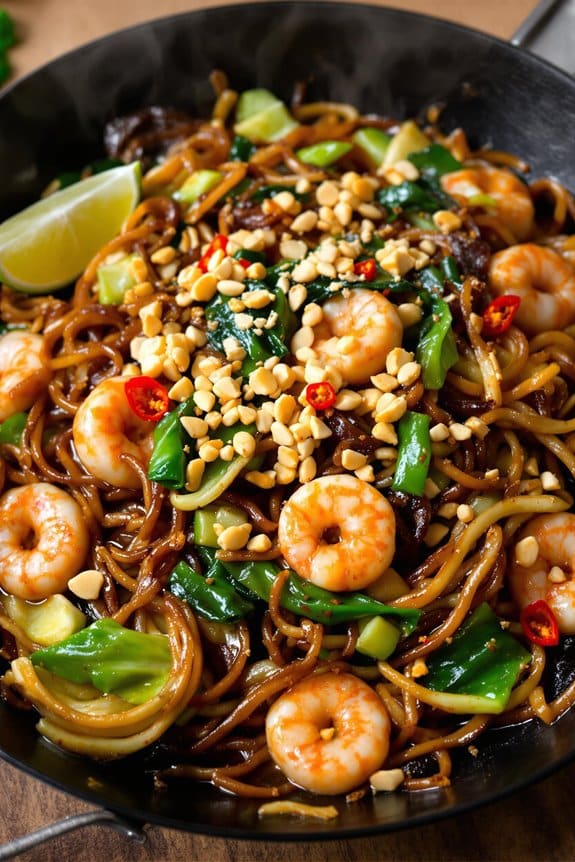
Making authentic pad see yew is like conducting a beautiful, chaotic orchestra where timing is everything and your wok becomes your stage. Start by whisking together your sauce base—combine those 3 tablespoons of Asian fish sauce, 1 tablespoon of miso (or fermented yellow beans), 1 tablespoon of oyster sauce, 4 teaspoons of sugar, and 1/4 cup of low sodium soy sauce in a bowl until everything’s harmoniously blended. This is your flavor foundation, so taste it and remember this moment because you’re about to transform it into something magical.
Next, bring a large pot of lightly salted water to a rolling boil and toss in that 1 pound of bok choy cut into 2-inch pieces, cooking for just 2 minutes until it’s crisp-tender—we want it with some bite, not mushy. Transfer the bok choy to a plate, then add those 2/3 pound of dried rice noodles to the same boiling water, cooking for about 5 minutes until they’re firm but pliable, like perfectly al dente pasta with an Asian twist.
Here’s where things get fun and potentially messy, so channel your inner street food vendor because we’re about to do some serious wok action. Drain those noodles, rinse them under cold water, shake out every drop of excess water like you’re wringing out a wet towel, then toss them in a bowl with 1 tablespoon of vegetable oil to prevent them from becoming one giant noodle blob.
Heat another tablespoon of oil in your largest nonstick skillet over high heat, add those 3/4 pound of shelled and deveined medium shrimp with a pinch of salt, and cook them for about 2 minutes until they’re pink and gorgeous—then add them to the plate with your bok choy. For this crucial step, a professional fish spatula helps you flip those shrimp perfectly without breaking them, ensuring each one cooks evenly and maintains its beautiful presentation.
Now comes the real show: add the remaining oil (that’s 1/4 cup plus 1 more tablespoon) to your hot skillet, toss in those 4 minced garlic cloves for 30 seconds until fragrant, then pour in your 3 beaten eggs and let them barely scramble for another 30 seconds. Add the noodles and toss gently, pour in your sauce mixture, then here’s the secret—don’t stir, just let everything cook for about 5 minutes until the liquid nearly evaporates and the bottom gets beautifully caramelized.
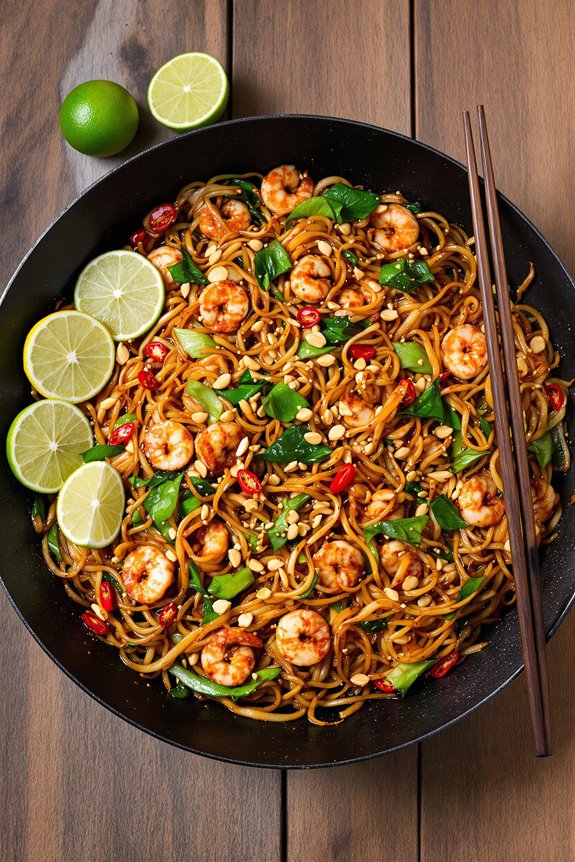
Give it one good stir, let it brown for another 2 minutes, then fold in your shrimp and bok choy just until heated through, sprinkle with those 3 sliced Thai bird chiles and 2 tablespoons of chopped roasted peanuts, and serve with lime wedges like the pad see yew champion you’ve just become.
Substitutions and Variations
Why stick to the exact recipe when pad see yew is practically begging you to get creative with whatever’s lurking in your fridge?
I swap shrimp for chicken, beef, or tofu without losing sleep over it. No miso? Yellow bean paste works, or just double the oyster sauce.
Fresh wide rice noodles beat dried ones every time if you can find them. Can’t handle the heat? Skip the chilies or use bell peppers instead.
I’ve thrown in broccoli when bok choy wasn’t available, and honestly, most sturdy vegetables work fine here.
Additional Things to Serve With Authentic Pad See Yew with Shrimp
While pad see yew stands proudly on its own as a complete meal, I can’t resist pairing it with a few simple sides that turn dinner into something special.
Fresh spring rolls make perfect companions, their crisp vegetables cutting through the noodles’ rich soy-based sauce. I love adding cucumber salad with rice vinegar dressing—it’s invigorating and takes maybe five minutes to prep.
Thai-style grilled eggplant brings smoky depth, while coconut rice offers creamy contrast. For drinks, iced jasmine tea or Thai iced coffee work beautifully.
Sometimes the simplest additions create the most memorable meals, wouldn’t you agree?
Final Thoughts
Pad see yew holds a special place in my heart because it’s one of those dishes that proves you don’t need fancy techniques or exotic ingredients to create something absolutely magical in your kitchen.
The beauty lies in its simplicity, honestly. Sweet, salty, umami-rich flavors dancing together with tender noodles and plump shrimp.
It’s comfort food that happens to be incredibly satisfying too. When I’m craving something that feels both familiar and exciting, this recipe delivers every single time.
Trust me, once you master this technique, you’ll find yourself making it again and again.