
The Simple Joy of these Japanese Rice Balls
While fancy restaurant dishes get all the Instagram glory, there’s something deeply satisfying about the humble onigiri that makes my heart skip a beat every time I spot one.
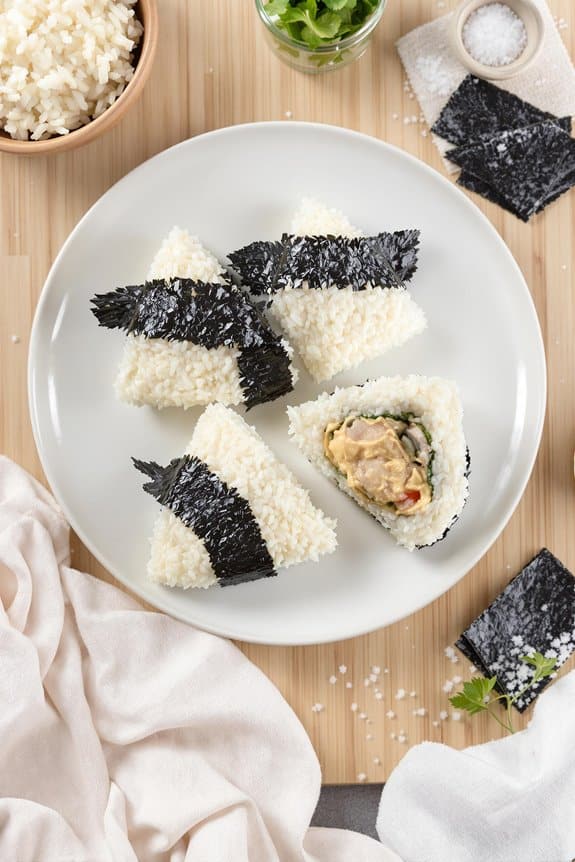
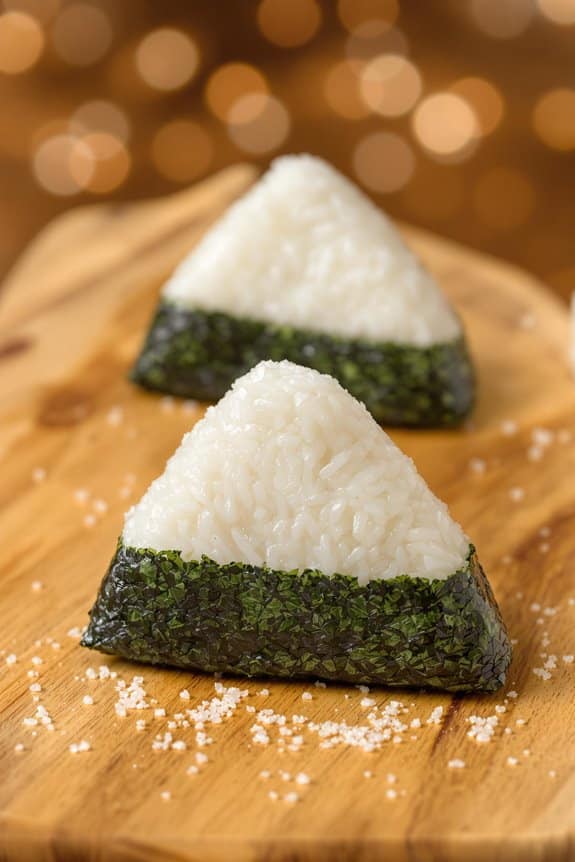
These little triangular treasures prove that comfort food doesn’t need complexity. Just rice, a filling, and maybe some nori wrapped around the outside. That’s it. No fancy techniques or specialized equipment required.
What gets me most excited is how they transform leftover rice into something special. They’re portable, practical, and absolutely perfect for those moments when you want homemade goodness without the fuss.
Ingredients
Getting your hands on the right ingredients for onigiri is invigoratingly simple, which honestly makes me want to dance a little happy dance in my kitchen. Most of what you need is probably sitting in your pantry right now, and the few specialty items are easy to track down at any Asian grocery store or even online if you’re feeling like a couch potato shopper.
- 2 cups cooked rice, cooled slightly
- 1/4 cup rice seasoning (furikake)
- Water, as needed
- Salt, to taste
- 2 sheets nori, cut into squares
- 1/2 cup tuna and Japanese mayonnaise
- 1/2 cup umeboshi (Japanese pickled plum)
- 1/2 cup BBQ chicken, chopped finely (or pork)
- 1/2 cup scrambled egg and soy sauce
The beauty of onigiri lies in how forgiving these ingredients can be. Your rice doesn’t need to be perfect sushi-grade stuff, though day-old rice actually works better because it’s not as sticky and clingy.
If you can’t find umeboshi, don’t panic and start googling flights to Japan – any pickled or preserved filling works wonderfully. Think pickled vegetables, leftover grilled salmon, or even that random bit of cooked bacon lurking in your fridge.
The nori sheets might seem intimidating if you’ve never worked with seaweed before, but they’re basically just oceanic wrapping paper that happens to taste amazing.
How to Make these Japanese Rice Balls
Making onigiri is like giving rice a warm, edible hug – therapeutic, simple, and infinitely satisfying in ways that might make you question why you ever stressed about complicated recipes. Start by mixing your 2 cups of cooked, slightly cooled rice with that 1/4 cup of rice seasoning if you’re feeling fancy, though honestly, plain rice works perfectly fine too.
The real magic happens when you rinse a small bowl with water, shake off the excess like you’re flicking away your cooking anxieties, then give it a light sprinkle of salt. This little ritual prevents the rice from staging a full-scale rebellion by sticking to everything except where you want it to go.
Here’s where things get wonderfully messy in the best possible way. Scoop some rice into your salted bowl, then use your finger to create a little crater in the center – think tiny rice volcano waiting for treasure. Drop about 2 teaspoons of your chosen filling into that crater, whether it’s the 1/2 cup tuna mixed with Japanese mayonnaise, some of those intriguingly sour umeboshi, finely chopped BBQ chicken, or scrambled eggs touched with soy sauce.
Cover your filling with more rice like you’re tucking it into bed, then comes the part that makes you feel like a rice sculptor. Wet your hands thoroughly because dry hands and rice have about as much chemistry as oil and water, then gently coax that rice into whatever shape speaks to your soul – triangles, balls, hearts, or that weird abstract shape that defies geometry but somehow works.
While your hands are still damp from shaping, consider how premium seafood cookware can elevate your onigiri game when preparing seafood fillings like seared tuna or grilled salmon that add restaurant-quality flair to these humble rice balls.
The final flourish involves those nori squares, which act like edible handles that transform your creation from “how exactly do I pick this up” to “oh, this is actually genius.” Just remember that nori is basically the potato chip of the seaweed world – it loses its satisfying crispness faster than you can say “Instagram photo,” so don’t let it hang around too long before serving.
Keep those squares separate until the very last moment, then watch as people marvel at your ability to turn leftover rice into something that looks intentional and tastes even better.
Substitutions and Variations
Since onigiri basically functions as edible architecture built from rice and dreams, you can swap out almost every component without causing structural collapse or culinary disappointment.
I love switching white rice for brown rice or even quinoa when I’m feeling fancy. The fillings become your playground—leftover teriyaki salmon, cream cheese with cucumber, or even peanut butter work brilliantly.
Don’t have nori? Try lettuce wraps or skip the wrapper entirely. Running low on furikake? Sesame seeds, everything bagel seasoning, or crushed crackers add delightful crunch.
Your imagination sets the only real boundaries here.
Additional Things to Serve With Japanese Rice Balls
Several classic Japanese sides transform your humble onigiri from a simple snack into a proper meal that’ll make your taste buds do a little happy dance.
I always reach for miso soup first – that warm, salty broth creates the perfect contrast to cool rice balls.
Pickled vegetables like cucumber or radish add that essential tangy crunch, while edamame brings protein and color to your plate.
Don’t overlook green tea; it cleanses your palate between bites beautifully.
For something heartier, I’ll add a small salad with sesame dressing or some grilled fish – suddenly you’ve got yourself a complete feast.
Final Thoughts
When you’ve mastered these simple steps, you’ll discover that onigiri becomes your go-to comfort food for practically any occasion.
Need lunch for tomorrow’s picnic? Onigiri. Want something satisfying after a long day? Onigiri again.
The beauty lies in its simplicity, really. You can prep a bunch on Sunday and grab them throughout the week. Plus, they’re endlessly customizable.
Feeling adventurous? Try different fillings. Want tradition? Stick with umeboshi.
I promise these little rice triangles will become your kitchen staples. They’re portable, delicious, and surprisingly filling. What more could you want from comfort food?