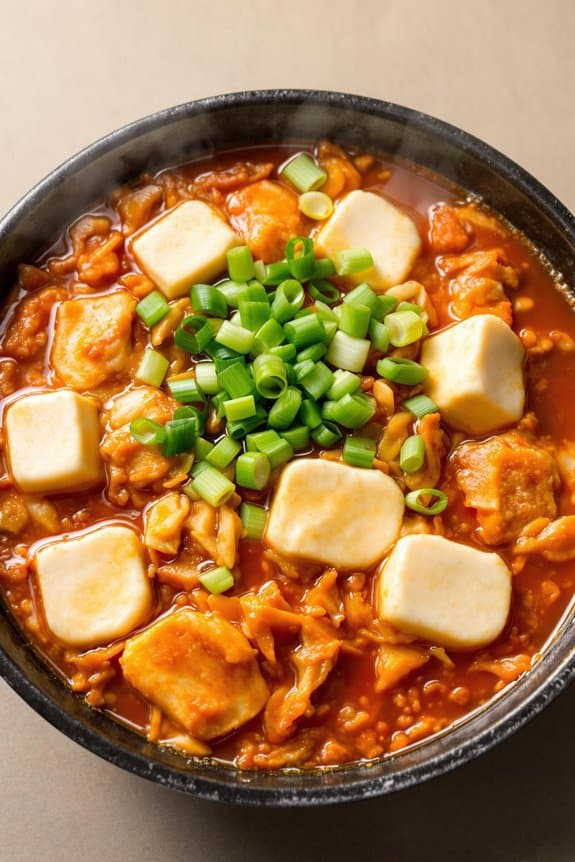

The Simple Joy of this Spicy Korean Kimchi Jjigae
When life gets complicated and you need something that’ll warm you from the inside out, kimchi jjigae swoops in like that friend who always knows exactly what to say.
This isn’t some fancy, intimidating dish that requires culinary school training. It’s pure comfort in a bowl, the kind of meal that makes you forget about deadlines and drama.
I love how the tangy kimchi mingles with tender pork belly, creating this perfect balance of spicy and savory.
Plus, when you’re stirring everything together in one pot, watching those flavors come alive? That’s kitchen therapy right there.
Ingredients
Getting your hands on kimchi jjigae ingredients is like gathering old friends for a reunion – each one brings something special to the party, and together they create magic. The beauty of this stew lies in its simplicity, really, because most of these ingredients are kitchen staples or easy finds at your local Asian grocery store.
Don’t worry if you’re new to Korean cooking; this ingredient list won’t send you on a wild goose chase across town.
For the Kimchi Jjigae:
- 1 ounce pork belly, sliced
- 1 teaspoon ground black pepper
- 1 teaspoon salt
- 1 cup cabbage kimchi
- 1/2 teaspoon smashed garlic
- 4 slices oval disc-shaped Korean rice cakes (ddeok)
- 1 teaspoon granulated sugar
- 5 slices soft tofu or medium firm tofu
- Scallion, cut into 2-inch pieces for garnish
- Steamed rice for serving
- Korean side dishes for serving
For the Kimchi (if making from scratch):
- 1/2 cup coarse salt
- 1 whole napa cabbage, quartered lengthwise
- 1/2 cup fine salt
- 5 garlic cloves, peeled
- 5 thin slices ginger
- 1/2 onion, chopped
- 1/4 cup Korean fish sauce
- 1/4 cup salted shrimp sauce
- 1 tablespoon granulated sugar
- Korean red chili paste (gochujang)
- 1 bunch scallion, chopped into 2-inch pieces
Now, here’s the thing about these ingredients – some might feel foreign at first, but they’re worth tracking down. The Korean rice cakes, or ddeok, add this wonderful chewy texture that makes the stew more filling and satisfying.
If your regular grocery store doesn’t carry them, frozen ones work just fine and keep forever in your freezer. As for the kimchi, you can absolutely buy it pre-made from the store, which honestly saves you about two weeks of waiting around.
The gochujang might seem intimidating, but it’s just fermented chili paste that adds depth and heat without being aggressive about it.
How to Make this Spicy Korean Kimchi Jjigae
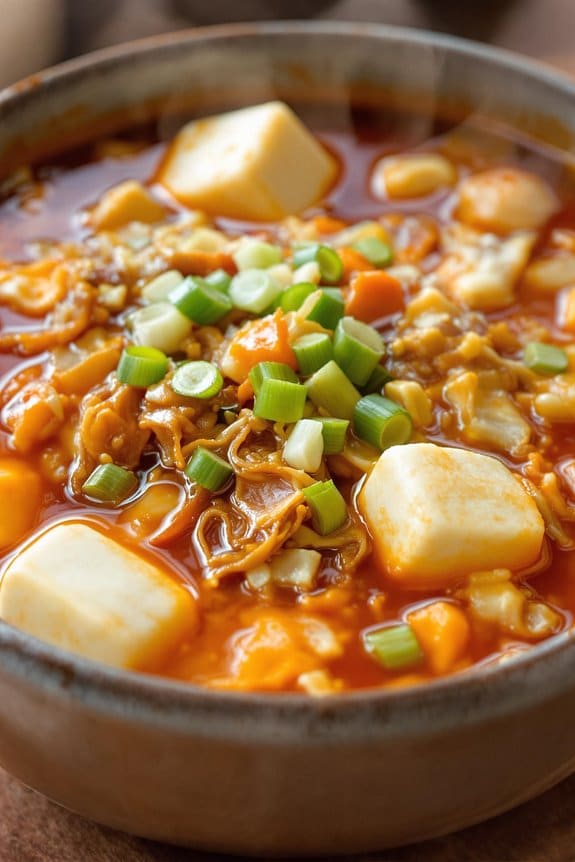
Making kimchi jjigae is honestly one of those comforting cooking experiences where you can almost feel your kitchen warming up with each bubble and simmer.
Start by tossing that 1 ounce of sliced pork belly into a small heavy pot over medium-high heat – no oil needed because this little guy is going to render its own fat like the generous ingredient it is. Sprinkle it with 1/2 teaspoon of black pepper and 1/2 teaspoon of salt, then let it cook while stirring occasionally until it’s almost done and looking nicely browned.
Here’s where things get exciting: add your 1 cup of cabbage kimchi right into that same pot and stir-fry everything together, letting those flavors mingle and get acquainted like old friends catching up over coffee.
Now comes the part where your stew really starts to come alive. Pour in 2 cups of water along with that 1/2 teaspoon of smashed garlic, then bring the whole thing to a boil because we want those flavors dancing around in there.
Once it’s bubbling happily, drop in those 4 slices of Korean rice cakes (ddeok) and let everything simmer for about 10 minutes – this is when your kitchen starts smelling like pure comfort food magic. During this time, the rice cakes will get perfectly chewy and the kimchi will release all its tangy, spicy goodness into the broth. While many restaurants prepare kimchi jjigae in larger batches using a commercial deep fryer for other menu items, this home-style version captures all the authentic flavors in a simple pot.
Finish by adding the remaining 1/2 teaspoon each of black pepper and salt, plus 1 teaspoon of granulated sugar to balance out all that beautiful heat, then gently nestle in those 5 slices of soft tofu and garnish with scallion pieces cut into 2-inch lengths.
The result is a steaming bowl of pure Korean comfort that practically begs to be served over rice with whatever Korean side dishes you can get your hands on.
Substitutions and Variations
Since this recipe is built on such humble, flexible ingredients, you’ve got plenty of room to play around and make it your own based on what’s hiding in your fridge or what your taste buds are craving.
Don’t have pork belly? I’d swap in bacon, spam, or even skip the meat entirely for a vegetarian version.
Rice cakes giving you trouble? Use ramen noodles instead—total game changer.
Can’t find Korean fish sauce? Regular fish sauce works fine.
Want it spicier? Add more gochujang or throw in some fresh chilies.
This stew forgives everything.
Additional Things to Serve With Spicy Korean Kimchi Jjigae
Now that you’ve mastered the art of customizing your kimchi jjigae, let’s talk about what to put alongside this belly-warming masterpiece.
I always serve steamed white rice – it’s non-negotiable, really. The fluffy grains soak up that spicy, tangy broth like little flavor sponges.
Add a variety of banchan (Korean side dishes) to create a proper feast. Think crisp cucumber kimchi, pickled daikon radish, seasoned bean sprouts, or blanched watercress.
These cool, invigorating sides balance the heat perfectly. Want something crunchy? Roasted seaweed sheets work beautifully for wrapping bites together.
Final Thoughts
When I think about kimchi jjigae, I can’t help but smile at how this humble stew transforms simple ingredients into something that feels like a warm hug from the inside out.
This recipe isn’t just about following steps—it’s about creating comfort. The fermented tang, the rich pork belly, those chewy rice cakes dancing in spicy broth.
Pure magic happens in that pot. Whether you’re nursing a cold, craving something soul-warming, or simply want to impress someone with minimal effort, this stew delivers every single time.
Trust me, your kitchen will smell amazing too.