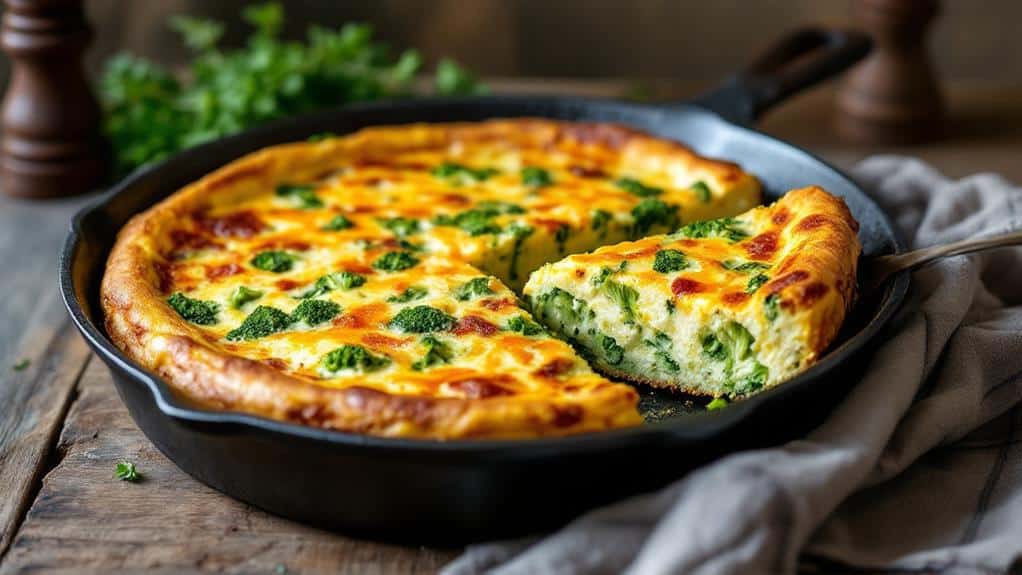
You've likely encountered frittatas before, but have you ever tried a broccoli frittata? This Italian-inspired dish combines the earthy flavors of broccoli with the richness of eggs to create a versatile meal that's perfect for any time of day. Whether you're looking for a quick breakfast, a light lunch, or a simple dinner option, a broccoli frittata can fit the bill. But there's more to this dish than meets the eye. Its simplicity belies a depth of flavor and nutritional value that might surprise you. Let's explore what makes this humble dish so special and why it deserves a place in your culinary repertoire.
Key Takeaways
- Broccoli frittata is a versatile Italian dish combining eggs, broccoli, and cheese, suitable for any meal.
- The recipe typically involves whisking eggs, cooking broccoli, and baking the mixture with cheese until golden brown.
- It's a simple 5-ingredient dish that can be customized with various herbs, cheeses, and vegetables.
- Frittatas can be served hot, at room temperature, or cold, making them convenient for meal prep.
- The dish offers a nutritious balance of protein from eggs and vitamins from broccoli.
History
The humble frittata has its roots in Italian cuisine, dating back centuries. You'll find that this egg-based dish, which resembles an open-faced omelet, has been a staple in Italian households for generations. As you explore into its history, you'll discover that frittatas were originally created as a way to use up leftover ingredients, making them a practical and economical meal option.
In the past, Italian cooks would combine eggs with whatever vegetables, cheeses, or meats they'd on hand, creating a hearty and satisfying dish that could feed an entire family. The frittata's versatility made it popular among all social classes, from peasants to nobility.
Over time, as the dish spread beyond Italy's borders, it evolved to include a wide variety of ingredients and cooking methods. Today, you can find countless variations of frittatas, including the delicious broccoli frittata you're learning about. When you prepare this dish, you're not just cooking a meal; you're participating in a rich culinary tradition that has stood the test of time, adapting to modern tastes while maintaining its rustic charm.
Recipe
Broccoli frittata is a delightful and flexible dish that combines the nutritional advantages of broccoli with the protein-rich goodness of eggs. This uncomplicated yet gratifying meal can be enjoyed for breakfast, lunch, or dinner, making it a perfect choice for busy individuals or those seeking a quick and effortless meal solution.
This five-ingredient version of the broccoli frittata simplifies the recipe without compromising taste. By focusing on key elements, you can create a nourishing and delectable dish that comes together swiftly. The mix of tender broccoli florets, airy eggs, and melted cheese forms a harmonious combination of textures and flavors that will satisfy even the most selective eaters.
- 8 large eggs
- 2 cups broccoli florets
- 1 cup shredded cheddar cheese
- 2 tablespoons olive oil
- Salt and pepper to taste
Preheat the oven to 375°F (190°C). In a large bowl, whisk the eggs and season with salt and pepper. Heat olive oil in an oven-safe skillet over medium heat. Add broccoli florets and cook for 3-4 minutes until slightly tender. Pour the whisked eggs over the broccoli, then sprinkle the cheese on top. Cook for 2-3 minutes until the edges start to set. Transfer the skillet to the preheated oven and bake for 10-12 minutes, or until the frittata is fully set and golden brown on top.
For optimal results, use a cast-iron skillet or any oven-safe non-stick pan to guarantee easy release of the frittata. To enhance the taste, consider incorporating herbs like basil or thyme, or experiment with different varieties of cheese such as Parmesan or feta. The frittata can be served hot, at room temperature, or even cold, making it an exceptional choice for meal prep or picnics. Leftovers can be stored in an airtight container in the refrigerator for up to 3 days.
Cooking Steps
To create your delicious broccoli frittata, you'll begin by whisking the eggs with salt and pepper, ensuring they're well combined.
Next, you'll cook the broccoli florets in a skillet until they're slightly tender, then pour the whisked eggs over them, creating a base for your frittata.
Step 1. Whisk Eggs and Seasoning
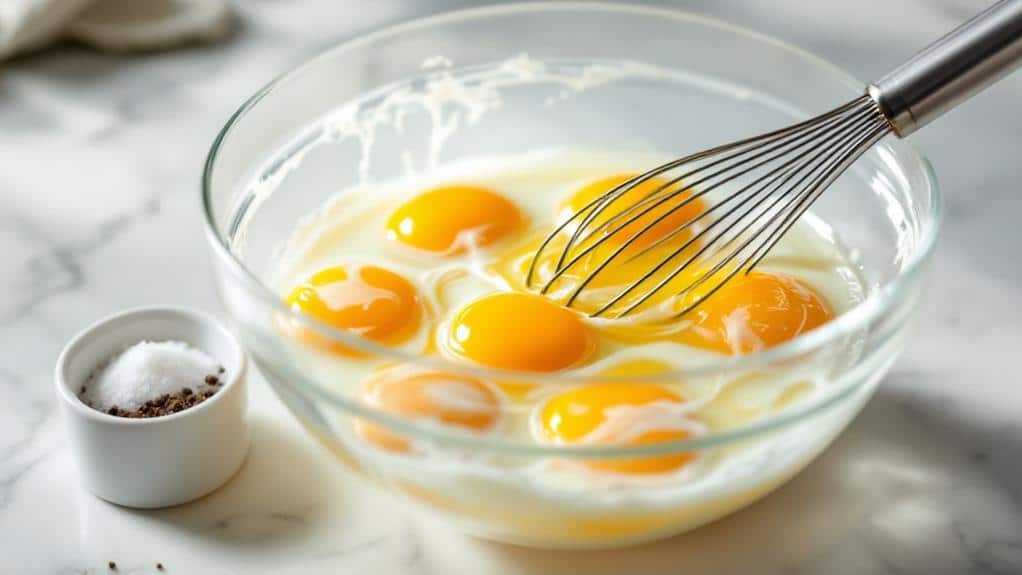
In a large bowl, crack open the eight eggs and discard the shells. You'll want to whisk the eggs vigorously, incorporating air to create a light and fluffy texture. As you whisk, you'll notice the mixture becoming more uniform in color and consistency. This process, which dates back to ancient Roman cuisine, is essential for achieving the perfect frittata texture.
Now it's time to season your egg mixture. Sprinkle in a generous pinch of salt and a few grinds of fresh black pepper. Don't be shy with the seasoning; eggs can handle a good amount of salt.
If you're feeling adventurous, you could add a dash of dried herbs like basil or oregano, which will infuse the frittata with aromatic flavors. As you whisk in the seasonings, imagine how they'll enhance the overall taste of your dish. The salt will bring out the egginess, while the pepper adds a subtle kick.
Continue whisking until all ingredients are well combined, ensuring that every bite of your frittata will be perfectly seasoned.
Step 2. Cook Broccoli in Skillet
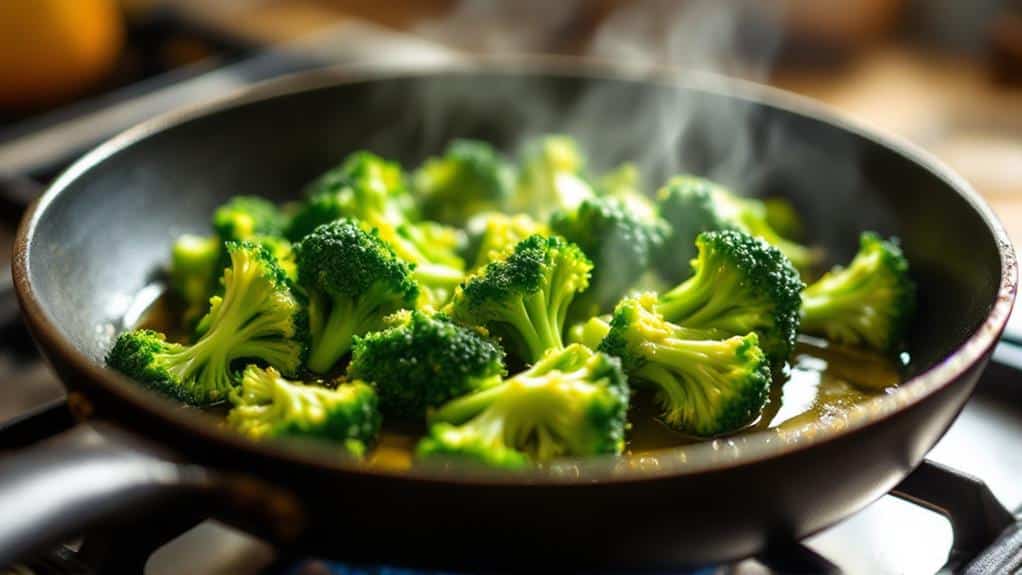
Next up, you'll need to focus on cooking the broccoli to perfection. Take your oven-safe skillet, preferably a cast-iron one, and place it over medium heat. As the pan warms up, add two tablespoons of olive oil, allowing it to shimmer and coat the bottom of the skillet. Once the oil is hot, carefully add your two cups of broccoli florets to the pan. You'll hear a satisfying sizzle as the vegetables hit the hot surface.
Give the broccoli a gentle stir, ensuring that each floret is coated with a thin layer of oil.
Cook the broccoli for about 3-4 minutes, stirring occasionally to prevent burning. You're aiming for a tender-crisp texture, where the broccoli still has a bit of bite but isn't raw.
As the florets cook, you'll notice their color intensifying to a vibrant green, and a delightful aroma will fill your kitchen. This quick cooking method helps retain the broccoli's nutrients and natural sweetness, which will perfectly complement the eggs and cheese in your frittata.
Step 3. Pour Eggs Over Broccoli
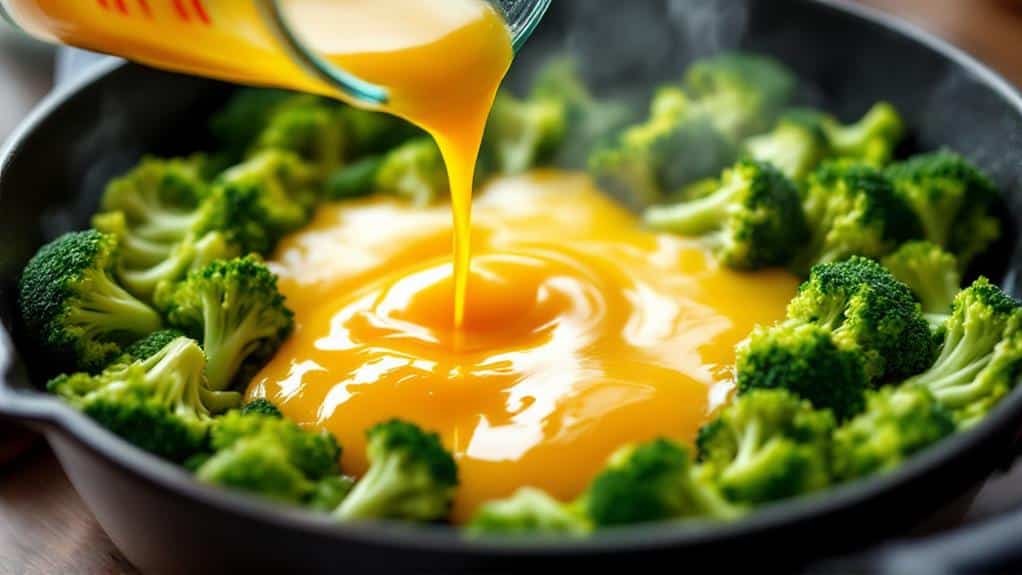
With the broccoli perfectly cooked, it's time to add the egg mixture. Carefully pour the whisked eggs over the tender broccoli florets in your skillet, making sure they're evenly distributed. As you do this, you'll notice the eggs beginning to set around the edges, creating a golden border that'll eventually become the crispy exterior of your frittata.
Now, sprinkle the shredded cheddar cheese over the surface of the eggs, watching as it begins to melt and create pockets of gooey goodness throughout the dish. This cheese layer won't only add flavor but also help to bind the frittata together as it cooks.
As the eggs start to set, you'll see small bubbles forming on the surface, indicating that the heat is working its magic. At this point, it's essential to resist the urge to stir, as you want the frittata to maintain its shape. Instead, let the eggs cook for about 2-3 minutes on the stovetop, allowing the bottom to set firmly before you transfer the skillet to the preheated oven for the final baking stage.
Step 4. Add Cheese and Cook Briefly
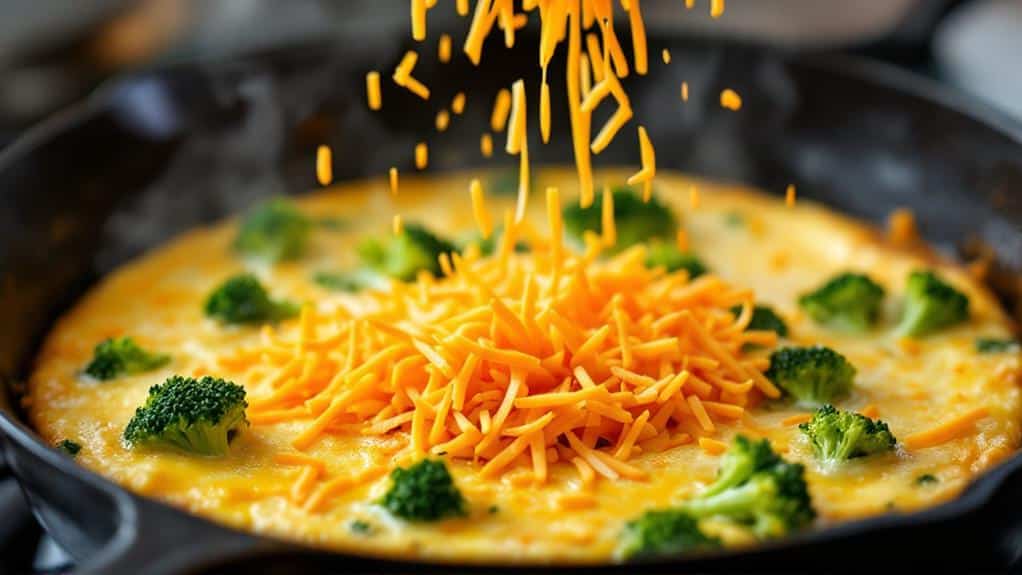
Once you've poured the eggs over the broccoli, it's time to add the cheese and give the frittata a brief stovetop cooking.
Sprinkle the shredded cheddar cheese evenly over the top of the egg mixture, allowing it to melt slightly as it comes into contact with the warm eggs. You'll notice the cheese beginning to soften and sink into the liquid eggs, creating pockets of gooey goodness throughout the frittata.
Now, let the frittata cook on the stovetop for about 2-3 minutes. During this time, you'll see the edges of the frittata starting to set and pull away from the sides of the skillet. This brief cooking period helps to create a sturdy base for your frittata and guarantees that the bottom develops a golden-brown crust.
As the edges set, the center will still be quite liquid, which is exactly what you want at this stage. The combination of the tender broccoli, fluffy eggs, and melting cheese will create a mouthwatering aroma in your kitchen, hinting at the delicious meal to come.
Step 5. Bake in Preheated Oven
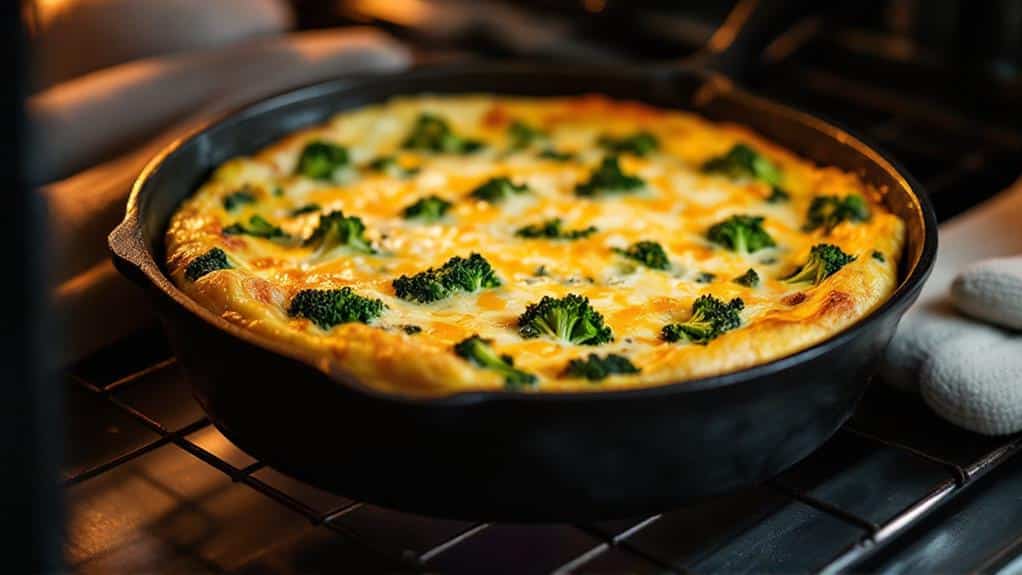
After the brief stovetop cooking, it's time to transfer your skillet to the preheated oven. Carefully use oven mitts to protect your hands as you move the hot pan, which should now contain a layer of tender broccoli florets nestled in partially set eggs and topped with melting cheese. Place the skillet on the middle rack of your oven, which you've already heated to 375°F (190°C).
As the frittata bakes, you'll notice the edges start to pull away from the sides of the pan, and the center will gradually puff up and set. The aroma of eggs and cheese will begin to fill your kitchen, mingling with the earthy scent of broccoli.
Keep a close eye on your frittata through the oven door, watching for the top to turn a beautiful golden brown. This process typically takes 10-12 minutes, but cooking times may vary depending on your oven. To test for doneness, gently shake the pan – if the center jiggles, it needs more time.
When fully cooked, the frittata will be firm throughout and slightly springy to the touch.
Final Thoughts
This broccoli frittata recipe offers a perfect balance of simplicity and flavor. You'll find that it's not only easy to make but also incredibly versatile, allowing you to enjoy it any time of day.
As you slice into the golden-brown top, you'll be greeted by the aroma of melted cheese and tender broccoli, making your mouth water in anticipation. The fluffy eggs provide a perfect canvas for the vibrant green florets, creating a visually appealing dish that's sure to impress your family or guests.
You'll appreciate how this frittata can be customized to your liking, whether you're adding herbs for extra flavor or swapping out the cheddar for your favorite cheese. Don't forget that leftovers can be a lifesaver on busy mornings; just reheat a slice for a quick and nutritious breakfast.
As you become more comfortable with this recipe, you'll likely find yourself experimenting with different vegetables and cheeses, turning this simple frittata into a staple in your culinary repertoire. Remember, cooking should be fun and rewarding, so enjoy the process and savor the delicious results!
Frequently Asked Questions
Can I Substitute Frozen Broccoli for Fresh in This Frittata Recipe?
You're in luck: frozen broccoli is a time-saving gem for this recipe. You'll want to thaw and drain it first, then pat it dry. It'll work just as well as fresh, saving you precious minutes.
How Can I Prevent the Frittata From Sticking to the Pan?
To prevent sticking, you'll want to use a well-seasoned cast-iron skillet or a non-stick pan. Don't skimp on the oil, and make sure it's hot before adding ingredients. You can also line the pan with parchment paper.
What Are Some Suitable Side Dishes to Serve With Broccoli Frittata?
Ahoy, matey! You'll want to pair your dish with a fresh green salad, crusty bread, or roasted potatoes. Don't forget about fruit salad or grilled vegetables. These sides complement the eggs nicely and round out your meal perfectly.
Can I Make This Frittata Ahead of Time and Reheat It?
Yes, you can make this ahead of time and reheat it. It's perfect for meal prep. Just cook it fully, let it cool, then store it in the fridge. When you're ready, reheat it in the oven or microwave.
Is It Possible to Make a Dairy-Free Version of This Frittata?
Yes, you can make a dairy-free version. Simply omit the cheese or replace it with a non-dairy alternative like nutritional yeast. You'll still enjoy a delicious, protein-packed meal without sacrificing flavor or texture.