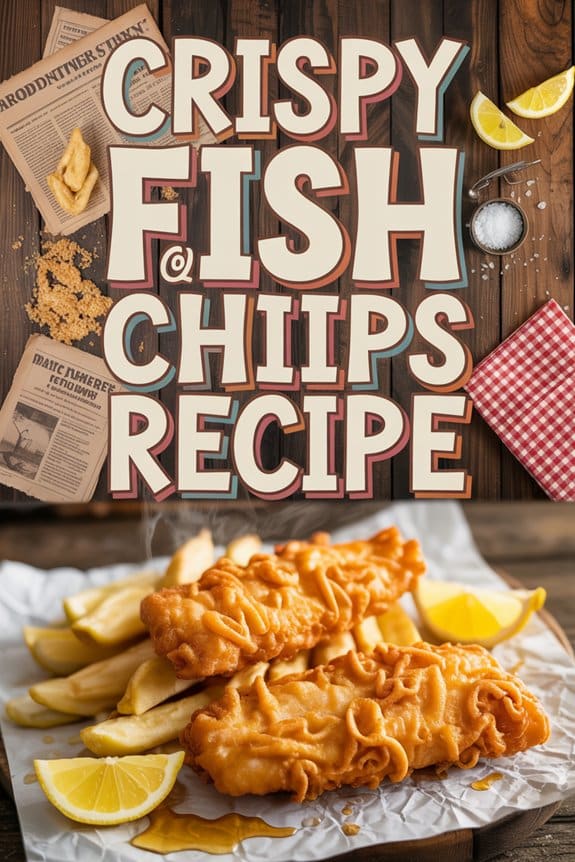
The Simple Joy of this Crispy Fish and Chips
There’s something absolutely magical about the satisfying crunch of perfectly battered fish giving way to tender, flaky white meat beneath.
I can’t think of many dishes that deliver such pure comfort with relatively simple ingredients.
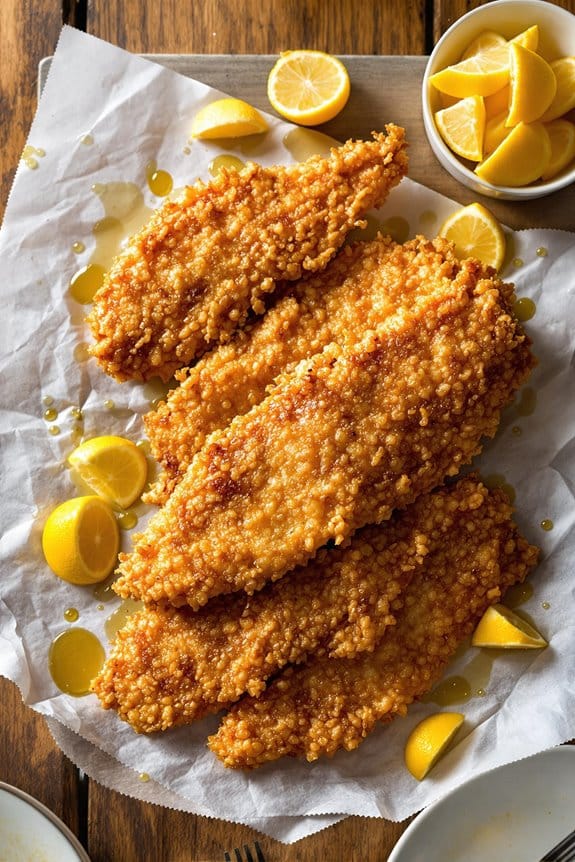
What makes this recipe truly special? It’s the contrast, really. That golden, crispy exterior protecting the delicate fish inside creates a textural symphony in your mouth.
Plus, let’s be honest, there’s something deeply satisfying about mastering the art of deep frying without turning your kitchen into a smoky disaster zone.
Trust me, your taste buds will thank you for this crispy perfection.
Ingredients
Getting your ingredients together for this crispy fish and chips is honestly the easiest part of the whole process. You probably have most of these sitting around your kitchen already, which makes this recipe even more appealing when you’re craving that perfect golden crunch.
The beauty lies in how such basic pantry staples can transform into something absolutely spectacular.
- Deep fat or oil for frying
- 8 medium white fish fillets
- 4 ounces self-raising flour
- 1/4 teaspoon salt
- 1 egg
- 1 tablespoon butter, melted
- 5 fluid ounces milk
- Lemon wedge for garnish
Now, let’s talk about the fish situation because this is where things get interesting. Any medium white fish will work beautifully here, think cod, haddock, or even pollock if you’re feeling budget-conscious.
The self-raising flour is doing the heavy lifting for that light, airy batter, so don’t try to substitute regular flour unless you want dense, chewy results.
And here’s a little secret, make sure your milk is at room temperature before you start mixing. Cold milk straight from the fridge can make your melted butter seize up into little lumps, and nobody wants chunky batter when they’re going for silky smooth perfection.
How to Make this Crispy Fish and Chips
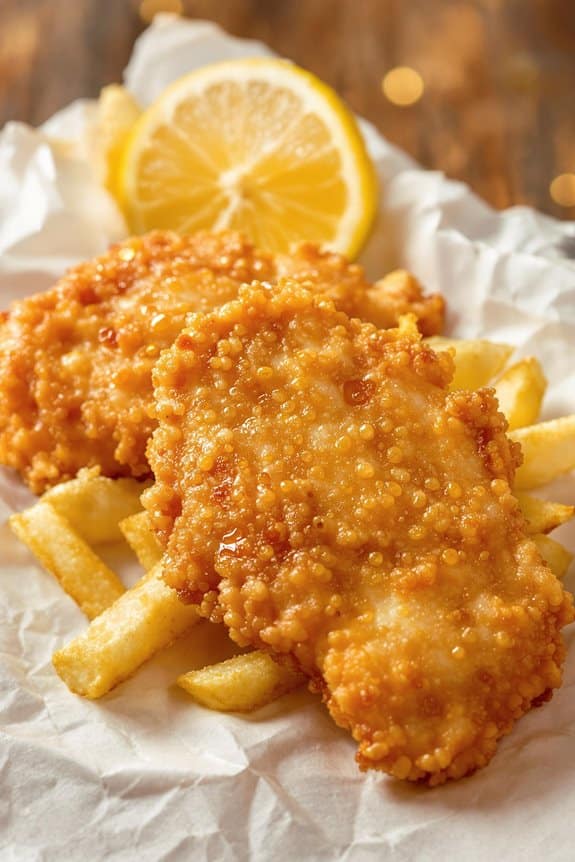
Making this crispy fish and chips is surprisingly straightforward once you get your oil situation sorted out, and trust me, the oil temperature is where most people either nail it or completely bomb their dinner plans.
Start by half-filling a deep pan with your frying fat or oil, then heat it until you see a faint haze rising from the surface. Here’s the old-school bread cube test that actually works better than any fancy thermometer: drop a cube of bread into the oil and watch the magic happen. If it sinks to the bottom, immediately bobs back up to the top, and turns golden in exactly 50 seconds, you’ve hit the sweet spot. For serious fish and chips enthusiasts who make this regularly, investing in a professional deep fryer can maintain precise temperatures automatically and handle larger batches with consistent results.
While your oil is heating up, sift that 4 ounces of self-raising flour and 1/4 teaspoon salt into a bowl because lumpy batter is the enemy of crispy perfection.
Now comes the batter mixing, which is where things can go sideways if you’re not paying attention. Beat the flour mixture into a smooth batter using 1 unbeaten egg, 1 tablespoon of melted butter, and 5 fluid ounces of milk, and please resist the urge to overmix this thing into submission. You want smooth, not tough and chewy from overworked gluten.
Coat just 2 pieces of your 8 medium white fish fillets with batter at a time, because crowding the pan is a rookie mistake that’ll drop your oil temperature faster than you can say “soggy fish.” Use a fork or kitchen tongs to carefully lift the battered fish into that perfectly heated oil, then let them fry until they’re crisp and golden, about 6-8 minutes for large pieces or 4-5 minutes for medium ones.
The key here is patience, because pulling them out too early means you’ll have gorgeous golden outsides hiding raw, gummy centers inside.
Once your fish emerges from its hot oil bath looking like golden perfection, drain it on unprinted white newspaper, which sounds oddly specific but actually works better than paper towels for absorbing excess oil without sticking.
Garnish with those lemon wedges because the bright acidity cuts through all that rich, crispy goodness, and suddenly you’ve got restaurant-quality fish and chips happening right in your own kitchen.
The whole process might seem a bit fussy at first, but once you nail the oil temperature and batter consistency, you’ll be cranking out batch after batch like some kind of fish and chips wizard.
Substitutions and Variations
Flexibility rules the fish and chips kitchen, because let’s face it, not everyone has self-raising flour sitting around or wants to stick to the exact same white fish every single time.
I swap self-raising for plain flour plus a teaspoon of baking powder. Works like magic.
For fish, cod’s classic, but haddock brings sweetness, while pollock saves money without sacrificing taste.
Beer instead of milk? Absolutely creates lighter, crispier batter. Buttermilk adds tang.
No eggs? Skip them, add extra liquid. I even use sparkling water sometimes for extra bubbles.
The batter adapts to whatever’s lurking in your fridge.
Additional Things to Serve With Crispy Fish and Chips
Three things turn good fish and chips into a proper feast: the right sides, the perfect sauces, and maybe something green to make you feel less guilty about all that delicious fried food.
I’m talking about mushy peas – that bright green British staple that somehow makes everything better. Add some pickled onions for tang, or go wild with pickled eggs if you’re feeling fancy.
Tartar sauce is obvious, but what about malt vinegar? That sharp bite cuts through all the oil beautifully. Coleslaw brings crunch and freshness, while bread and butter makes this a proper working-class meal that’ll stick to your ribs.
Final Thoughts
When you nail this crispy fish and chips recipe, you’re not just making dinner – you’re creating one of those meals that makes everyone at the table go quiet for the first few bites.
That golden, crackling batter paired with tender fish inside? Pure magic. I mean, there’s a reason this combo has survived centuries without needing fancy updates or molecular gastronomy twists.
Sometimes perfection doesn’t need improvement. Trust your oil temperature, don’t skip the newspaper draining step, and watch as you transform simple ingredients into something that’ll have people asking for seconds.