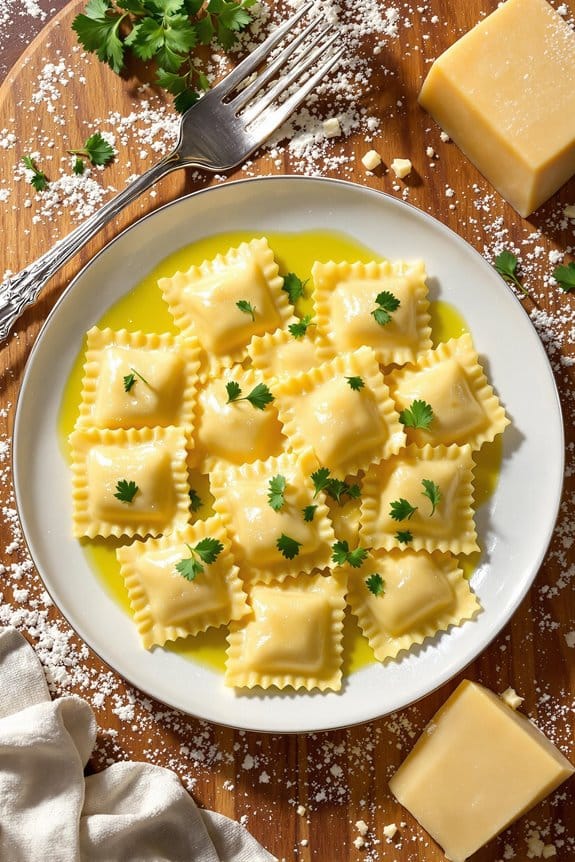
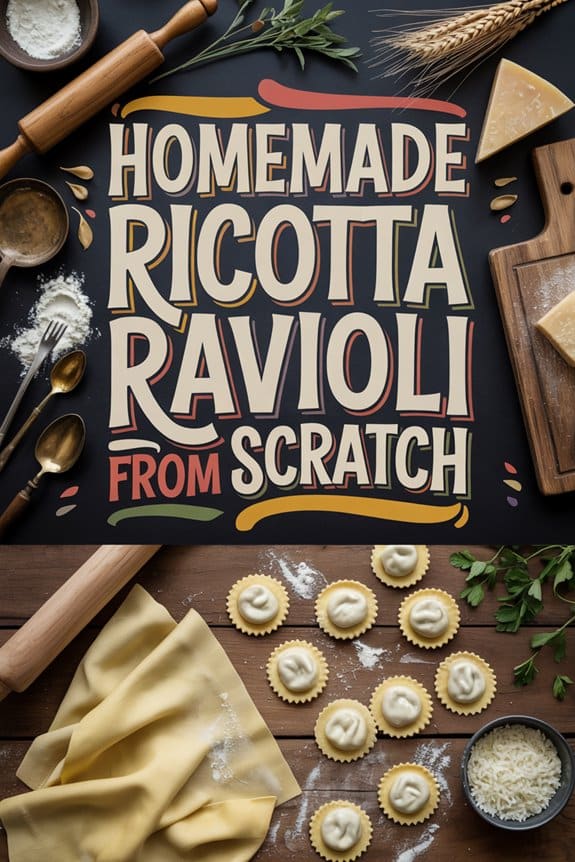
The Simple Joy of this Homemade Ricotta Ravioli
When you’re craving that perfect bite of tender pasta wrapped around creamy, herb-kissed ricotta, nothing quite compares to the satisfaction of making ravioli from scratch.
There’s something magical about transforming simple flour, eggs, and olive oil into silky pasta dough. Sure, I could grab a box from the freezer section, but where’s the fun in that?
The process itself becomes meditation – kneading dough until it’s smooth, rolling it paper-thin, piping that luscious ricotta filling. Each little pillow holds promise.
Three minutes in boiling water, and you’ve created restaurant-quality pasta that’ll make your kitchen smell like pure comfort.
Ingredients
Getting your ingredients together is honestly half the battle when it comes to making homemade ravioli. You’ll want to have everything measured and ready to go because once you start rolling that dough, momentum is your friend.
Trust me, there’s nothing worse than realizing you forgot the parmesan halfway through assembly.
For the Pasta Dough:
- 3 3/4 cups flour
- 5 eggs
- 3 tablespoons olive oil
- 1 pinch salt
For the Ricotta Filling:
- 2 cups fat-free ricotta cheese
- 1 cup part-skim mozzarella cheese
- 3 eggs
- 1/2 cup lowfat parmesan cheese
- 1/4 cup parsley
Now, let’s talk about ingredient quality because it really does matter here. Your ricotta should be well-drained – nobody wants soggy ravioli that burst in the water like little pasta bombs.
If your ricotta seems watery, let it sit in a fine-mesh strainer for about 30 minutes before using. The mozzarella works best when it’s finely grated, and fresh parsley will give you way better flavor than the dried stuff that’s been sitting in your spice cabinet since who knows when.
As for the flour, all-purpose works perfectly fine, though some pasta purists swear by tipo 00 if you’re feeling fancy.
How to Make this Homemade Ricotta Ravioli
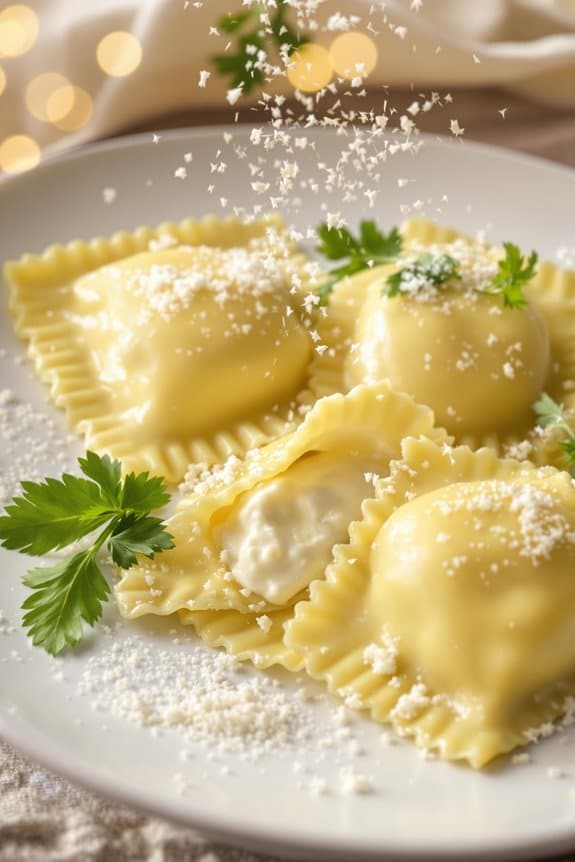
Let’s start with the pasta dough because, honestly, this is where the magic happens. Combine your 3 3/4 cups flour, 5 eggs, 3 tablespoons olive oil, and 1 pinch salt in a large bowl or directly on a clean countertop if you’re feeling like a proper Italian nonna.
Mix everything together and then knead that dough like it owes you money – we’re talking 10 to 15 minutes of solid kneading until it’s smooth and elastic. Your arms might feel like they’re staging a protest, but this is what develops that perfect pasta texture.
Once you’ve achieved dough nirvana, wrap it up and let it rest for one hour. This resting time isn’t optional, it’s what allows the gluten to relax so you can actually roll this thing out without it snapping back like a rubber band.
While your dough is taking its beauty nap, whip up the filling by mixing together 2 cups fat-free ricotta cheese, 1 cup part-skim mozzarella cheese, 3 eggs, 1/2 cup lowfat parmesan cheese, and 1/4 cup parsley until everything is well combined.
When that hour is up, roll your rested dough out to 1/16th inch thickness – and yes, that’s incredibly thin, almost see-through thin. You’ll want to work in sections unless you have a dining table the size of a small aircraft carrier.
Pipe or spoon your filling onto the dough in neat little portions, leaving enough space between them so you don’t end up with one giant mega-ravioli.
Lay another sheet of dough on top, press around each mound to seal, and cut with cookie cutters or a knife into individual ravioli. For precise, clean cuts that won’t drag or tear your delicate pasta, a professional chef knife makes all the difference in achieving restaurant-quality results.
Drop them into boiling salted water for just 3 to 4 minutes – they’ll float when they’re ready – then toss them with your favorite sauce and try not to eat the entire batch standing over the stove.
Substitutions and Variations
While this recipe gives you a fantastic baseline, I’ll be honest – ravioli is basically a blank canvas begging for your creative chaos.
Want to swap the ricotta? Go for it. Goat cheese, mascarpone, even cream cheese work beautifully. Feeling fancy? Add spinach, sun-dried tomatoes, or fresh herbs to your filling.
The mozzarella can become fontina or gruyere if you’re feeling bougie. Even the pasta dough welcomes change – try whole wheat flour or add herbs directly into the mix.
Why stick to squares when you can make circles, triangles, or whatever shape your cookie cutters demand?
Additional Things to Serve With Homemade Ricotta Ravioli
Since you’ve put all this love into crafting perfect pillows of cheesy goodness, you can’t just plop them naked on a plate and call it dinner – well, you could, but your ravioli deserves better company.
I always pair mine with a simple arugula salad dressed in lemon vinaigrette – that peppery bite cuts through all that creamy richness beautifully.
Garlic bread is obvious but necessary, because who doesn’t want to mop up every last drop of sauce?
A glass of Pinot Grigio doesn’t hurt either, though I won’t judge if you prefer sparkling water with lemon.
Final Thoughts
Making homemade ricotta ravioli isn’t just about following a recipe – it’s about creating something that’ll make your kitchen smell like heaven and your dinner guests think you’re some kind of pasta wizard.
Sure, it takes time and patience, but isn’t that what makes it special? When you bite into those tender pillows of cheesy goodness, you’ll understand why people have been making pasta by hand for centuries.
Trust me, once you master this technique, you’ll never look at store-bought ravioli the same way again. Your kitchen skills just leveled up.