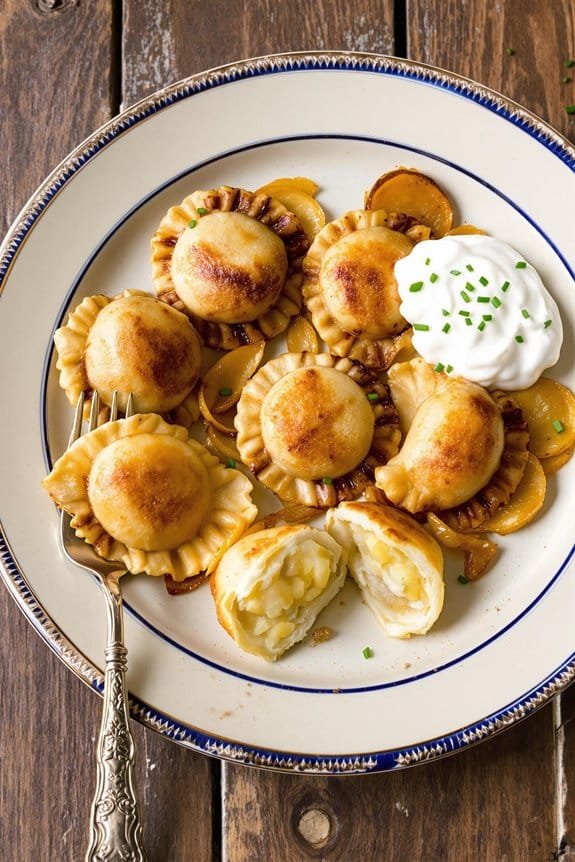

The Simple Joy of these Authentic Polish Pierogi
There’s something magical about the humble pierogi that transforms a handful of basic ingredients into pure comfort food gold.
I’m talking about flour, potatoes, a bit of butter – nothing fancy here. Yet when you roll that dough thin, spoon in creamy potato filling, and fold those little half-moons just right, you’ve created something that’ll make your kitchen smell like heaven.
The best part? Watching them bob to the surface in boiling water, like tiny edible life preservers announcing they’re ready.
Then comes the golden butter-frying finale that seals the deal.
Ingredients
You don’t need to raid a specialty store or break the bank for these pierogi ingredients – most of this stuff is probably hanging out in your kitchen right now.
We’re talking basic pantry staples that somehow come together to create something absolutely wonderful, and honestly, that’s the beauty of traditional Polish cooking.
For the Dough:
- 2 cups all-purpose flour
- 1/2 teaspoon baking soda
- 1/4 teaspoon salt
- 3/4 to 1 cup milk (enough to bring the dough together)
For the Potato Filling:
- 2 cups mashed potatoes
- 2 tablespoons butter
- 2 tablespoons milk
- 1 medium onion, chopped
- Salt and pepper to taste
For Cooking and Serving:
– Additional butter for frying
Now, let’s talk about a few things that might save you some headache later.
That milk measurement is a range for a reason – flour can be moody depending on humidity, brand, and how you measure it, so start with 3/4 cup and add more if your dough feels too dry.
For the mashed potatoes, day-old leftovers actually work beautifully here, just make sure they’re not too chunky or your pierogi will be lumpy little disasters.
And about that onion – some folks like to sauté it first for a milder flavor, while others throw it in raw for more bite. Your call, really.
How to Make these Authentic Polish Pierogi

Making pierogi is surprisingly straightforward once you get the hang of it, though I’ll warn you right now that your first batch might look like wonky half-moons and that’s completely normal.
Start by whisking together your 2 cups flour, 1/2 teaspoon baking soda, and 1/4 teaspoon salt in a large bowl, then gradually add 3/4 to 1 cup milk until you’ve got a soft, workable dough that’s not too sticky.
While you’re kneading that together, prepare your filling by combining 2 cups mashed potatoes, 2 tablespoons butter, 2 tablespoons milk, and your chopped medium onion, seasoning the whole thing with salt and pepper until it tastes like something you’d actually want to eat.
Divide your dough into 9 or 10 roughly equal pieces – and honestly, don’t stress too much about perfection here because pierogi are supposed to be rustic and homey, not Instagram-perfect.
Roll each ball into a flat circle about the size of your palm, plop a generous spoonful of that potato filling right in the center, then fold the dough over like you’re making a dumpling and press those edges together like your life depends on it.
Trust me, there’s nothing sadder than watching your beautiful filling escape into the boiling water because you got lazy with the sealing.
Drop these little pockets of joy into a pot of boiling water and wait for them to float to the surface – this is your cue that they’re ready to come out, so fish them out with a slotted spoon and let them drain for a minute.
Now comes the best part: heat up some butter in a skillet and fry those cooked pierogi until they’re golden brown on both sides, creating that perfect contrast between the crispy exterior and tender, pillowy interior that makes pierogi so addictive.
For a hearty Polish dinner, serve your homemade pierogi alongside a steaming french onion soup in traditional crocks, creating a comfort food feast that would make any babcia proud.
Substitutions and Variations
While this traditional potato filling is absolutely classic, pierogi are wonderfully forgiving when it comes to swapping ingredients and trying new flavors.
I love experimenting with different fillings – cheese and onion, sauerkraut and mushroom, or even sweet versions with farmer’s cheese and fruit.
You can substitute the all-purpose flour with whole wheat for a nuttier taste, though the texture gets slightly denser.
If you’re out of milk, buttermilk works beautifully and adds tang.
Want them extra rich? I sometimes replace half the milk with sour cream in the dough.
The possibilities are endless, really.
Additional Things to Serve With Authentic Polish Pierogi
Once those golden pierogi hit your plate, the real fun begins with choosing what to serve alongside them.
I’m partial to a dollop of sour cream—it’s classic for good reason. Caramelized onions? Pure magic. They add sweetness that balances the savory filling perfectly.
Want something green? Sauerkraut works beautifully, though fresh dill scattered on top brightens everything up. Some folks swear by crispy bacon bits, and honestly, who am I to argue with bacon?
Apple sauce might sound weird, but trust me on this one. Keep it simple, keep it traditional, and you can’t go wrong.
Final Thoughts
There’s something deeply satisfying about mastering a recipe that connects you to generations of Polish grandmothers who perfected these little pockets of comfort.
I’ll be honest—my first batch looked more like wonky half-moons than perfect crescents, but they still tasted incredible.
That’s the beauty of pierogi, really. They’re forgiving. Each fold teaches you something new, each batch gets a little better.
Whether you’re making them for Sunday dinner or because you’re craving that warm, starchy hug only pierogi can provide, you’re carrying forward a tradition that’s lasted centuries.
Pretty amazing for flour and potatoes, right?