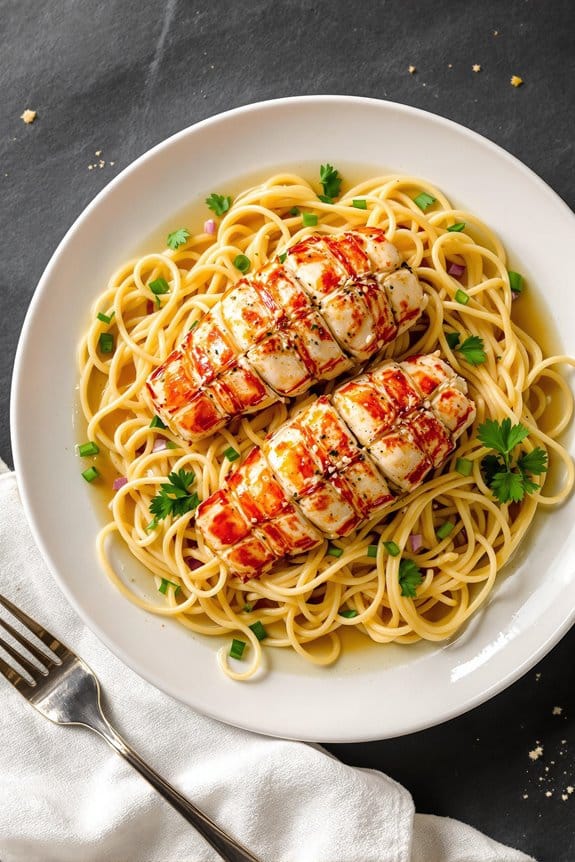
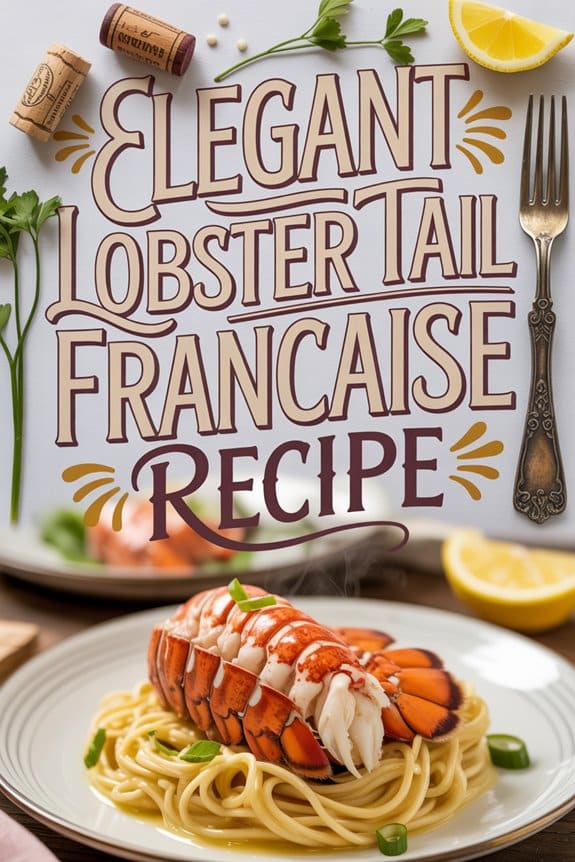
The Simple Joy of this Elegant Lobster Tail Francaise
While lobster tail might sound like something you’d only order at a fancy restaurant, this francaise recipe proves that restaurant-quality elegance can happen right in your own kitchen.
I promise you, this dish delivers maximum wow factor with surprisingly simple techniques. The buttery, lemony sauce coating tender lobster over delicate angel hair pasta? Pure magic.
What makes this recipe so approachable is that it uses basic cooking methods—butterflying, dredging, sautéing—that you’ve probably mastered already.
No complicated techniques or intimidating equipment required. Just straightforward steps that transform humble ingredients into something genuinely special.
Ingredients
Getting this lobster francaise on your table starts with gathering ingredients that might surprise you—most of them are probably sitting in your kitchen right now. The star of the show, obviously, is those six small lobster tails, but everything else reads like a standard pantry raid. You’ll want fresh ingredients for the best flavor, but nothing here requires a special trip to some fancy gourmet store.
- 6 small lobster tails
- 3 eggs
- 1 tablespoon chopped flat leaf parsley
- 1/8 teaspoon black pepper
- 1/2 cup all-purpose flour
- 1/2 cup unsalted butter
- 2 tablespoons olive oil
- 1 cup dry white wine
- 1 cup chicken broth
- 1 lemon (for 3 tablespoons juice)
- 3 teaspoons minced fresh garlic
- 2 scallions, minced
- 1 small shallot, minced
- Salt and pepper to taste
- 1 tablespoon cornstarch
- 1 pound angel hair pasta
The beauty of this ingredient list lies in its simplicity, though I do have a few thoughts about making smart choices. For the white wine, use something you’d actually drink—cooking wine from the grocery store tastes like regret in a bottle. A crisp Sauvignon Blanc or Pinot Grigio works perfectly.
When it comes to the lobster tails, frozen ones work just fine and won’t break the bank like fresh ones might. The key is letting them thaw completely in the refrigerator before you start cooking.
And here’s a little secret: if you can’t find flat leaf parsley, regular curly parsley works just fine, despite what the cooking snobs might tell you.
How to Make this Elegant Lobster Tail Francaise
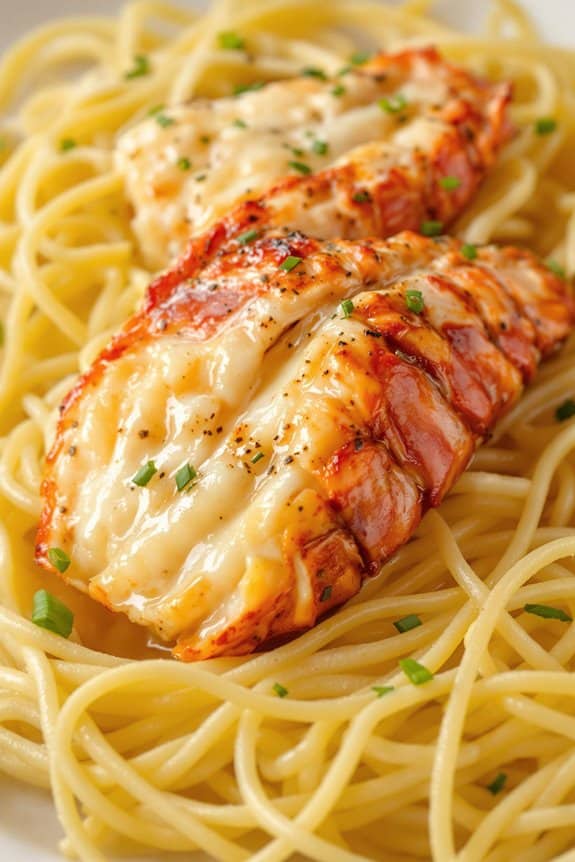
Making lobster francaise sounds intimidating, but honestly, it’s just fancy pan-frying with a wine sauce that does most of the heavy lifting for you. Start by removing those 6 lobster tails from their shells and giving them a quick rinse under cold water—nobody wants gritty lobster.
The butterfly technique is where things get slightly surgical: slice each tail down the center, but don’t go all the way through or you’ll have lobster confetti. Spread the tails open and give them a gentle palm-press to flatten them out.
While you’re playing lobster surgeon, whisk together 3 eggs, 1 tablespoon of chopped flat leaf parsley, and 1/8 teaspoon black pepper in a shallow bowl, and spread 1/2 cup of all-purpose flour on some waxed paper because we’re going old school here.
The actual cooking happens fast, so have everything ready because lobster waits for no one. Melt 1/2 cup of unsalted butter with 2 tablespoons olive oil in a large heavy skillet—cast iron if you’ve got it, though any heavy pan will do the job.
Once that butter mixture is hot and happy, dredge each lobster tail in flour, dip it in the egg mixture, and slide it right into the pan. Two minutes per side until they’re golden brown, then pull them out and tent with foil like you’re tucking them in for a nap.
Now comes the sauce magic: pour 1 cup dry white wine, 1 cup chicken broth, and the juice of 1 lemon into that same pan, whisking like your life depends on it. Let it bubble and reduce by about a third, then toss in 2 minced scallions, 1 minced small shallot, 3 teaspoons minced garlic, plus salt and pepper to taste.
After about five minutes of gentle simmering, mix 1 tablespoon cornstarch with a little water and slowly whisk it in until the sauce coats the back of a spoon. Drop those lobster tails back in for a quick warm-up, then serve over 1 pound of cooked angel hair pasta, and try not to look too smug about pulling off restaurant-quality food in your own kitchen. For easier shell removal, consider investing in a quality stainless lobster cracker which makes extracting the meat cleaner and more efficient than struggling with regular kitchen tools.
Substitutions and Variations
Since not everyone keeps lobster tails in their back pocket for Tuesday night dinner, let’s talk swaps that won’t break the bank or send you on a wild seafood chase.
I’d reach for large shrimp, scallops, or even chicken cutlets. Yes, chicken francaise is totally a thing.
For the wine, any dry white works—pinot grigio, sauvignon blanc, whatever’s open.
No angel hair? Linguine or fettuccine step right in.
Want it richer? Double the butter.
Feeling fancy? Add capers or mushrooms to the sauce.
Sometimes I’ll toss in cherry tomatoes because color makes everything prettier.
Additional Things to Serve With Elegant Lobster Tail Francaise
Elegance demands supporting players that won’t steal the spotlight from your buttery, wine-kissed lobster tails.
I lean toward simple steamed asparagus or roasted Brussels sprouts—vegetables that complement without competing. A crisp Caesar salad works beautifully, adding textural contrast to all that silky richness.
For bread, I’d choose crusty sourdough or garlic bread, perfect for soaking up every drop of that gorgeous sauce. Honestly, you could serve this with plain white rice and still feel fancy.
The lobster’s doing all the heavy lifting here, so keep everything else understated and let those tails shine.
Final Thoughts
While you might feel intimidated by the thought of cooking lobster at home, this francaise recipe proves that restaurant-quality elegance doesn’t require culinary school training.
I promise you’ll surprise yourself with how achievable this dish really is. The buttery, lemony sauce paired with tender lobster creates something truly special.
Sure, there’s some prep work involved, but isn’t that half the fun? When you serve this to guests, they’ll think you’ve been hiding secret chef skills.
Trust me, you’ve got this. Sometimes the most impressive meals come from simple techniques executed with a little confidence and good ingredients.