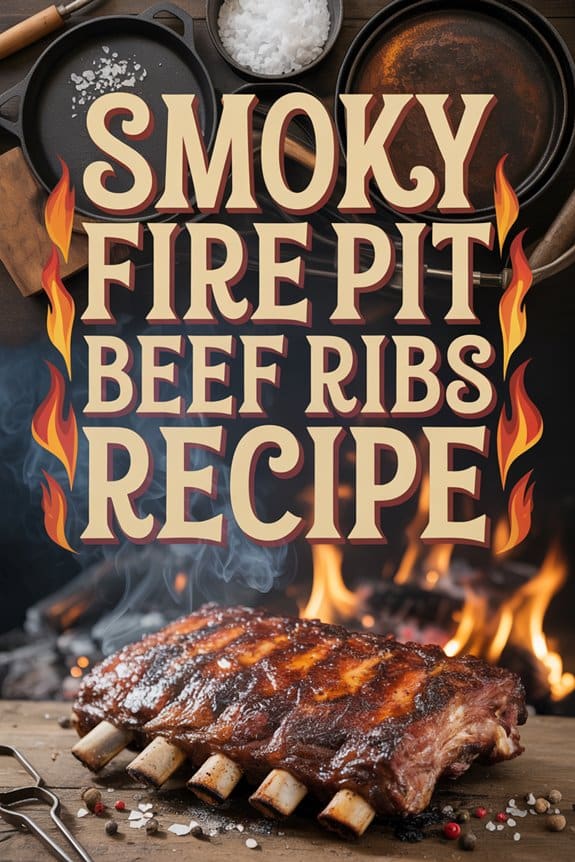
The Simple Joy of these Smoky Fire Pit Beef Ribs
While most people think beef ribs require fancy equipment or complicated rubs, I’m here to tell you that some of life’s greatest pleasures come from the simplest approaches.
These smoky fire pit beef ribs prove that point beautifully. Just salt, pepper, and patience create magic that’ll make your neighbors suddenly very interested in being friends.
Why overcomplicate perfection? The fire does the heavy lifting while you sit back, maybe crack open something cold, and watch the meat transform into tender, smoky bliss.
Sometimes the best recipes are the ones your great-grandfather would recognize, no fancy gadgets required.
Ingredients
You know what I love about this recipe? The ingredient list is so short, you could memorize it during a commercial break. We’re talking about the kind of simplicity that makes you wonder why you ever thought cooking had to be complicated.
These beef ribs don’t need a chemistry degree or a spice rack that looks like a small pharmacy, just good meat and the basics that have been making people happy around fires for thousands of years.
- 1 rack beef ribs (about 1 pound)
- Coarse salt
- Fresh coarse ground black pepper
Now, let’s talk about what really matters here. When I say “1 rack,” I’m being conservative because, honestly, who makes just one rack of ribs when there’s a fire going?
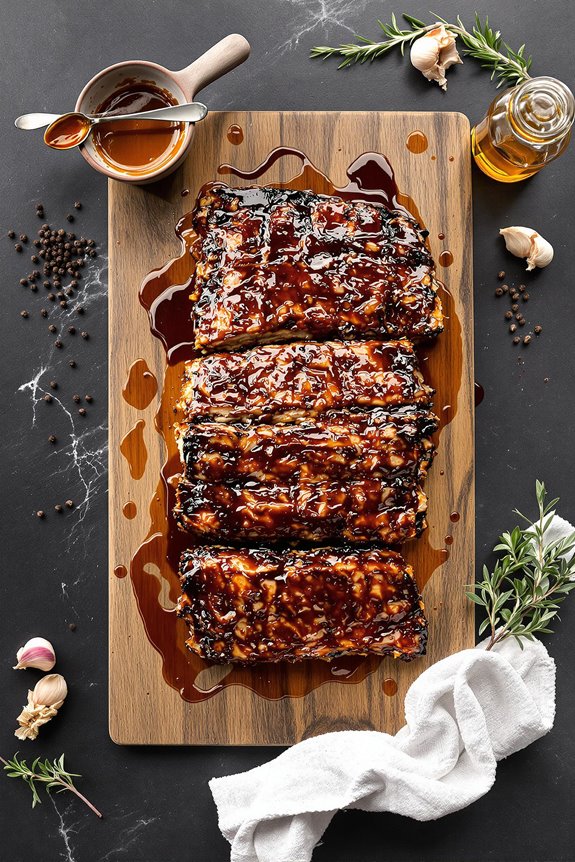
The coarse salt and fresh cracked black pepper aren’t just seasoning, they’re creating a crust that locks in all those smoky flavors while the low heat works its slow magic.
Don’t even think about using that fine table salt or pre-ground pepper that’s been sitting in your cabinet since the last presidential election. The coarse textures give you better coverage and more flavor punch, plus they won’t just blow away in the first breeze that comes along.
How to Make these Smoky Fire Pit Beef Ribs
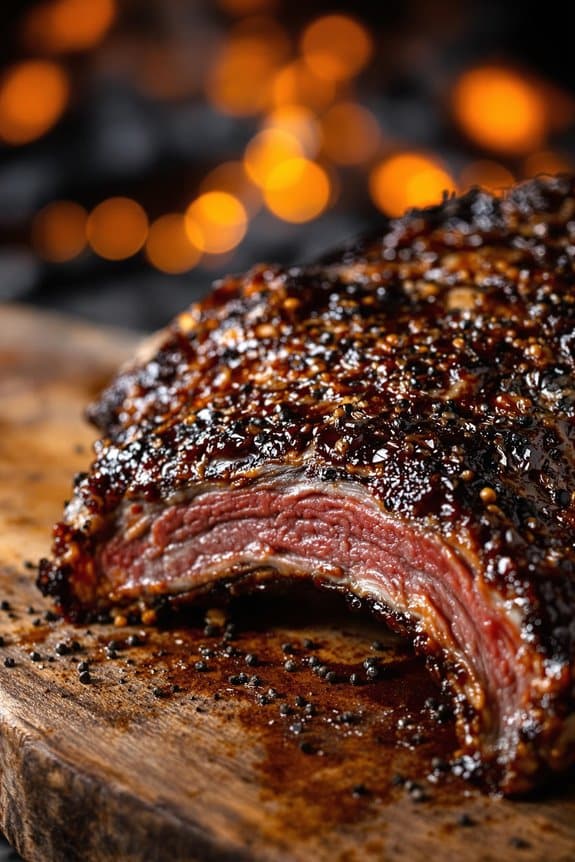
Getting these ribs ready is where the magic happens, and trust me, there’s something deeply satisfying about sprinkling that coarse salt and fresh coarse ground black pepper over 1 rack of beef ribs while a fire crackles nearby.
Don’t be shy with the seasoning, you want that salt and pepper to coat every surface like a flavorful armor that’s going to protect and enhance the meat during its long, slow transformation. Once your ribs are properly seasoned, it’s time to find the sweet spot on your fire pit setup, which means placing them on the lower rack, the one that’s closest to the fire where all the real work happens.
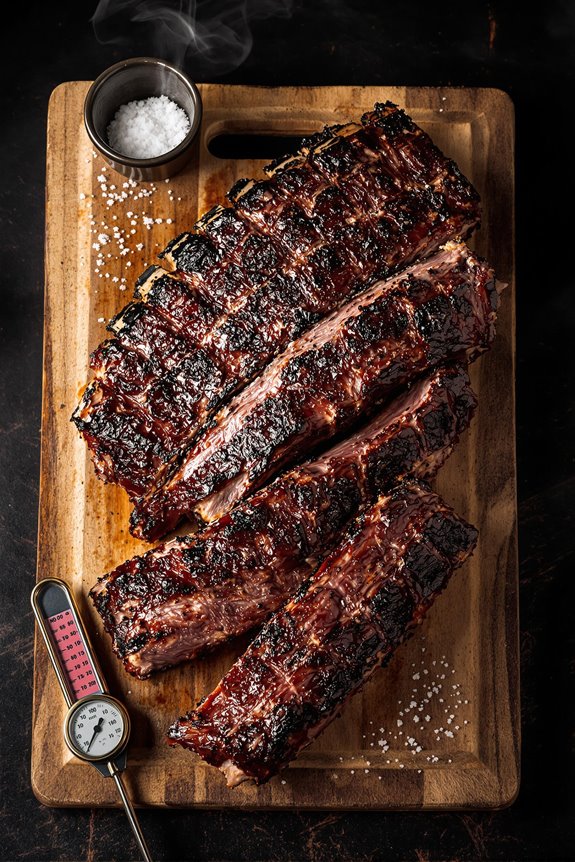
Here’s where patience becomes your best friend, because these ribs need to hang out in that 300 to 350 degree range for a solid 4 to 6 hours until they reach that perfect internal temperature of 190 to 200 degrees F.
I know what you’re thinking, that seems like a really high temperature for meat, but beef ribs are different beasts than your typical steak, they need that heat to break down all the tough connective tissue into something that’ll make you forget every other piece of meat you’ve ever eaten.
The key is rotating those ribs three times throughout the cooking process, which keeps everything cooking evenly and prevents any one side from getting too much love from the fire while the other side sits there feeling neglected. For those who want even more control over their smoking process, a premium BBQ smoker can offer precise temperature management and consistent smoke circulation that takes the guesswork out of achieving perfectly cooked ribs.
The whole process is really about letting time and consistent heat do their thing while you resist the urge to mess with the ribs every twenty minutes.
Sure, you’ll want to check on them, maybe poke them with a thermometer, but mostly you’re just maintaining that steady heat and enjoying the increasingly amazing smells that are going to have your neighbors suddenly finding reasons to come chat over the fence.
Substitutions and Variations
Since beef ribs aren’t exactly sitting in every grocery store’s meat case like chicken breasts, let’s talk about what happens when you can’t find that perfect rack or when you’re feeling adventurous enough to shake things up.
Pork ribs work beautifully here, though they’ll finish faster at around 145 degrees internal temp. Chuck roast? Absolutely divine when treated the same way.
I’ll swap the salt-pepper combo for garlic powder, paprika, or even a coffee rub when I’m feeling fancy. No fire pit? Your grill or smoker will handle this perfectly.
Additional Things to Serve With Smoky Fire Pit Beef Ribs
While these beef ribs are absolutely the star of the show, they’re begging for some serious backup dancers to complete this carnivorous symphony.
I’m talking creamy coleslaw that cuts through all that rich, smoky fat. Maybe some tangy potato salad or buttery corn on the cob. Baked beans are practically mandatory – they soak up those meat drippings like little flavor sponges.
Don’t forget crusty bread for mopping up sauce, because wasting any of those precious juices should be illegal. Cold beer ties everything together perfectly, washing down each glorious, messy bite.
Final Thoughts
Look, I won’t sugarcoat it – mastering fire pit beef ribs isn’t exactly a walk in the park, but that’s what makes it so rewarding when you nail it.
Those long hours tending the fire, the patience required, the slight panic when your temperature spikes – it’s all part of the journey.
And honestly? Even if your first attempt doesn’t turn out picture-perfect, you’ll still have tender, smoky meat that beats anything from a restaurant.
Trust the process, embrace the learning curve, and remember that every pitmaster started somewhere.
Your fire pit adventure begins now.