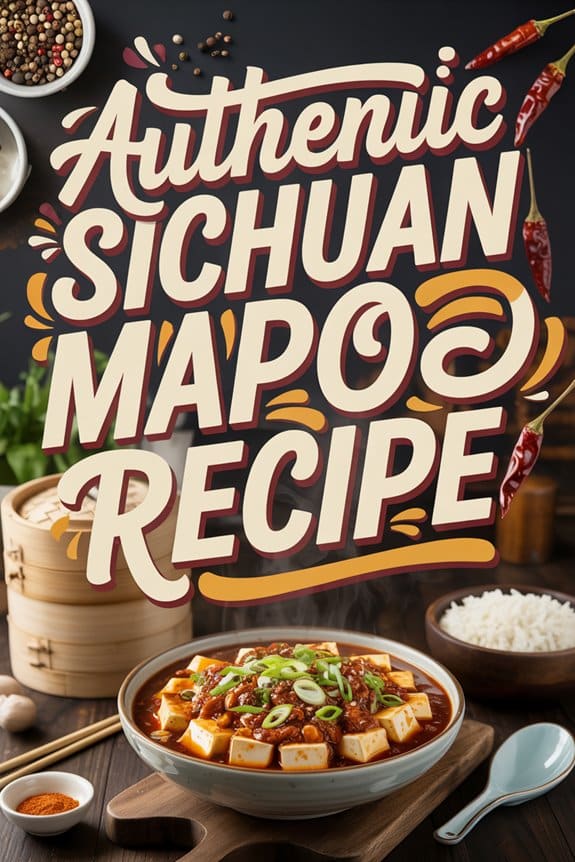
The Simple Joy of this Authentic Sichuan Mapo Tofu
When I first encountered authentic Sichuan mapo tofu, I couldn’t believe something so devastatingly delicious could come from such humble ingredients. Ground pork, silky tofu, and a handful of pantry staples transform into pure magic.
What’s the secret? That numbing tingle from Sichuan peppercorns dancing with fiery chili oil. I’m convinced this dish exists to prove that comfort food doesn’t need complexity, just soul.
The beauty lies in its rustic simplicity – no fancy knife work or elaborate techniques required. Just bold flavors that’ll make your taste buds wonder why you ever bothered with bland takeout.
Ingredients
Let me tell you, gathering ingredients for authentic Sichuan mapo tofu feels like assembling a small army of flavor warriors. You’re not dealing with a massive shopping list here, but each ingredient pulls serious weight in delivering that signature numbing heat and umami punch that makes this dish legendary.
The beauty is that most of these pantry heroes will stick around for future adventures in Chinese cooking.
- 1 garlic clove, minced
- 1/4 lb ground pork or ground chicken
- 2 tablespoons spicy bean paste
- 2 teaspoons chili powder
- 2 teaspoons light soy sauce
- 12 1/3 ounces silken tofu (preferably firm or extra-firm)
- 2 tablespoons vegetable oil
- 1 tablespoon chili oil
- 1 tablespoon black bean garlic sauce
- 1 leek, ends trimmed, sliced and rinsed
- 1/2 cup low sodium chicken broth or vegetable broth
- 1 1/2 teaspoons cornstarch
- 1 1/2-2 tablespoons Sichuan peppercorns, ground
Now, let’s talk about the ingredients that might send you on a treasure hunt. That spicy bean paste, doubanjiang, is your non-negotiable flavor foundation – it’s worth tracking down at an Asian grocery store because substitutes just won’t cut it.
Same goes for those Sichuan peppercorns, which you’ll want to grind yourself for maximum numbing power. If you’re feeling overwhelmed by the specialty items, start with what you can find and build your pantry over time.
The tofu situation is essential too – firm or extra-firm silken tofu holds its shape without turning into sad, broken dreams in your wok.
How to Make this Authentic Sichuan Mapo Tofu
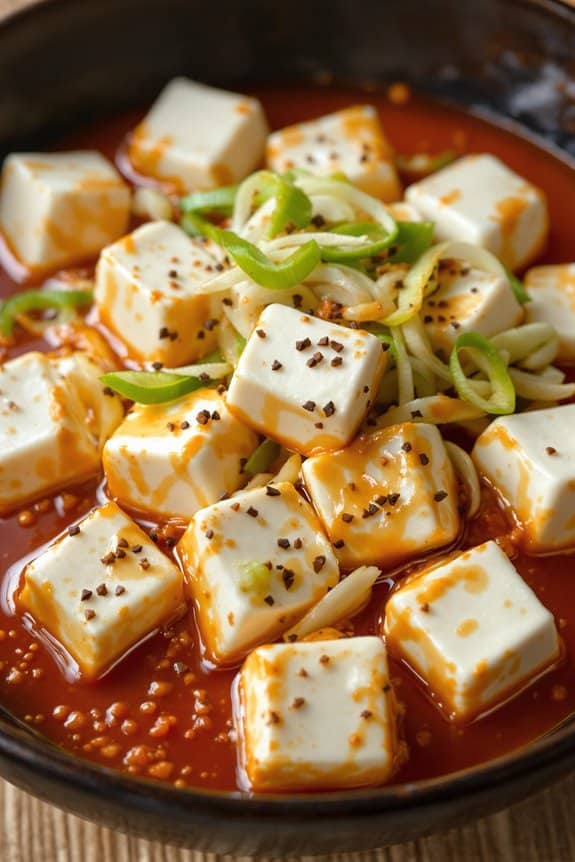
Making authentic Sichuan mapo tofu feels like conducting a symphony of heat and texture, where timing matters almost as much as technique. Start by combining your 1 garlic clove (minced), 2 tablespoons spicy bean paste, 2 teaspoons chili powder, 2 teaspoons light soy sauce, 1 tablespoon black bean garlic sauce, and your 1/4 lb ground pork or chicken into one aromatic mixture that’ll make your kitchen smell like a proper Sichuan restaurant.
While you’re mixing that flavor bomb, cut your 12 1/3 ounces of silken tofu into 1/2 to 3/4-inch cubes, treating each piece like the delicate treasure it is. Nobody wants broken tofu floating around like sad little clouds in their sauce.
The real magic happens when you fire up that wok or large skillet to screaming hot temperatures. For achieving restaurant-quality results, premium seafood cookware offers superior heat distribution and retention that professional chefs rely on for authentic wok cooking. Add your 2 tablespoons vegetable oil and 1 tablespoon chili oil, waiting until the oil starts smoking like it means business. Toss in your meat and seasoning mixture, stir-frying for 2-3 minutes if you’re using meat, or just 30-60 seconds if you’re going vegetarian.
Add your sliced and rinsed 1 leek for another 2-3 minutes of vigorous stirring. Now comes the gentle part that separates the pros from the amateurs, mix your 1 1/2 teaspoons cornstarch into that 1/2 cup low sodium chicken broth until smooth, then pour it into the wok along with your precious tofu cubes. Stir with the tenderness of someone handling butterfly wings.
Lower the heat and let everything simmer together for 3-4 minutes, allowing those flavors to get properly acquainted. Once you turn off the heat, sprinkle in those 1 1/2-2 tablespoons ground Sichuan peppercorns, giving everything one final gentle stir before letting the residual heat work its magic for another 1-2 minutes.
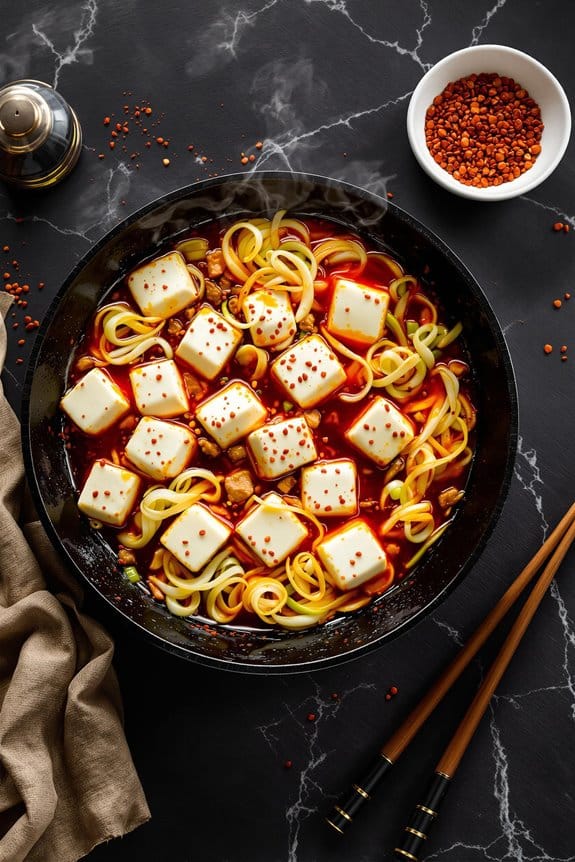
The result should be silky tofu swimming in a glossy, brick-red sauce that promises to deliver that legendary ma-la sensation that’ll make your tongue tingle in the best possible way.
Substitutions and Variations
Authentic doesn’t have to mean rigid, and I’m about to prove that this beloved Sichuan classic can bend without breaking its soul.
Short on ground pork? Turkey works beautifully, or skip meat entirely for vegetarian magic.
Can’t find spicy bean paste? Mix miso with chili garlic sauce in a pinch.
Firm tofu crumbles on you? That’s character, not failure.
Swap chicken broth for mushroom broth, dial down the Sichuan peppercorns if you’re spice-shy, or throw in some mushrooms because why not?
The dish forgives, adapts, and still delivers that numbing, tingling bliss we crave.
Additional Things to Serve With Authentic Sichuan Mapo Tofu
While mapo tofu commands attention as the star of any meal, it craves companions that won’t compete but will complement its bold, numbing personality.
I always reach for steamed jasmine rice—it’s the perfect canvas for soaking up that spicy, silky sauce.
Want something green? Try blanched Chinese broccoli or simple steamed bok choy. Their mild bitterness cuts through the richness beautifully.
For texture contrast, I love adding crispy cucumber salad or pickled vegetables on the side. They provide that cool, crunchy relief your palate desperately needs after each fiery, peppercorn-tinged bite.
Trust me on this combo.
Final Thoughts
Once you’ve mastered this recipe, you’ll find yourself craving that perfect balance of ma and la—the numbing tingle and fiery heat that defines true Sichuan cuisine. I promise this dish will become your go-to comfort food. The silky tofu practically melts in your mouth, while those Sichuan peppercorns create that signature buzz on your tongue. Don’t worry if your first attempt isn’t restaurant-perfect—mine certainly won’t be either. The beauty lies in adjusting heat levels to your preference. This recipe connects you to centuries of tradition, one satisfying spoonful at a time.