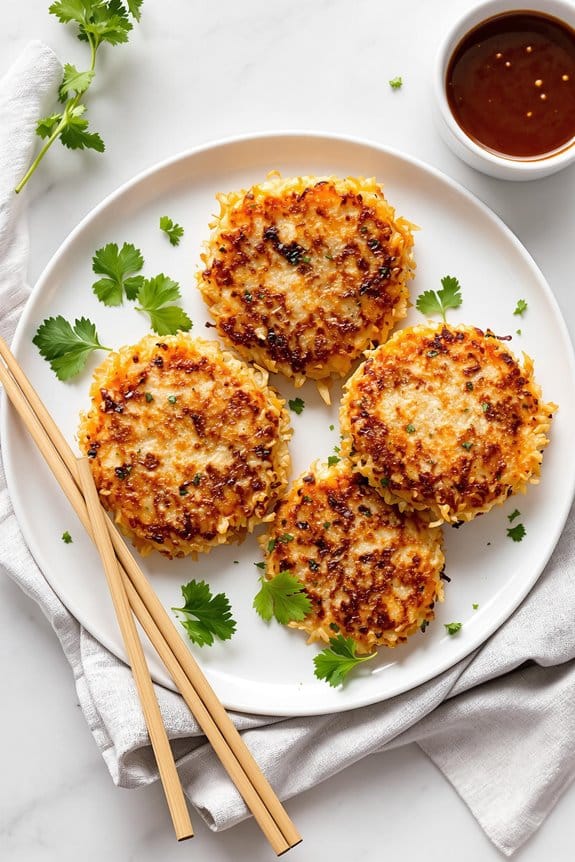
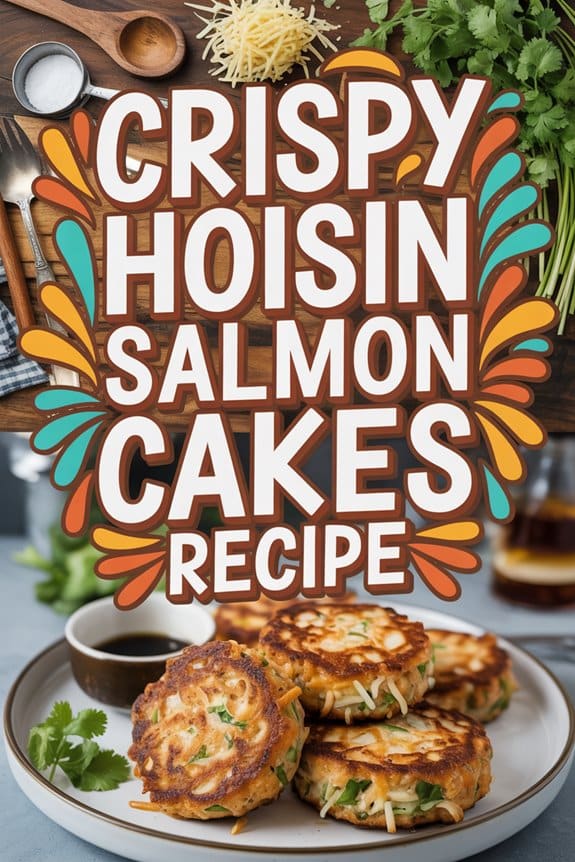
The Simple Joy of these Crispy Hoisin Salmon Cakes
When I think about comfort food that doesn’t require a culinary degree to master, these crispy hoisin salmon cakes immediately come to mind.
They’re wonderfully forgiving, which suits my cooking style perfectly. The hoisin sauce brings that sweet-savory depth that makes everything taste more sophisticated than it actually is.
Plus, you’re basically combining shredded potatoes with salmon—what could go wrong?
The beauty lies in their simplicity: parboil, shred, mix, shape, fry. No fancy techniques or intimidating ingredients.
Just honest-to-goodness comfort food that happens to look impressive enough for company, assuming you don’t tell them how easy they were.
Ingredients
For these crispy hoisin salmon cakes, you’ll need just a handful of ingredients that you can probably grab in one quick grocery store run. Nothing too fancy or intimidating here—just straightforward, honest ingredients that work beautifully together. The star of the show is obviously the salmon, but don’t overlook how the humble potato becomes the perfect crispy foundation for everything else.
- 2 russet potatoes or 2 yukon gold potatoes, unpeeled
- 12 ounces salmon fillets, skinned and finely chopped
- 2 tablespoons hoisin sauce
- 2 tablespoons cilantro, finely chopped
- Salt and pepper
- Flour, for coating
- 3 tablespoons olive oil
- 4 tablespoons breadcrumbs
When it comes to the potatoes, either russet or yukon gold will work perfectly fine, though I lean toward yukon gold because they hold together a bit better and have that naturally creamy texture.
The salmon should be fresh if possible, but honestly, if you’re working with what’s available, don’t stress about it too much. Just make sure it’s skinned and chopped finely—you want pieces that will bind well with the potato shreds.
The hoisin sauce is doing a lot of heavy lifting here flavor-wise, so don’t skimp on it, and fresh cilantro really does make a difference over the dried stuff, even though I’m usually the first person to take shortcuts wherever possible.
How to Make these Crispy Hoisin Salmon Cakes
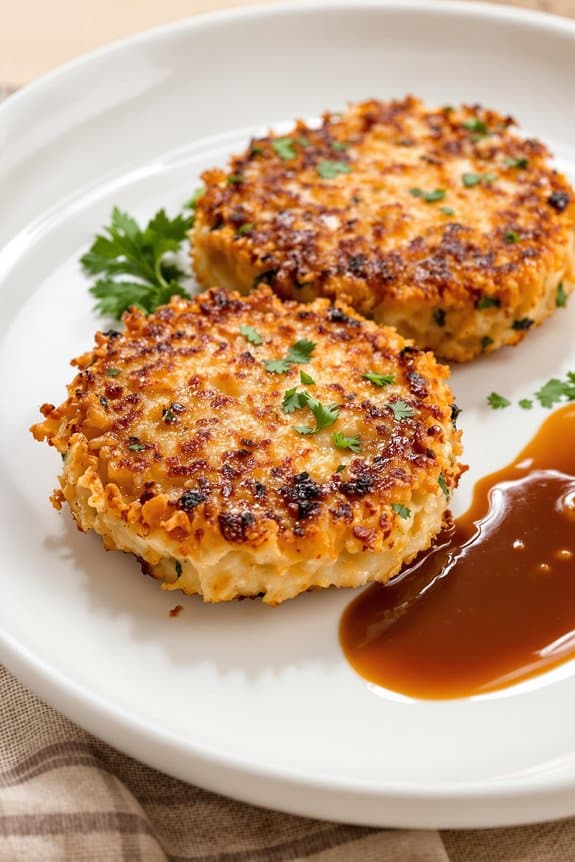
Making these salmon cakes is honestly more forgiving than you’d think, which is perfect because let’s face it—most of us aren’t looking for another finicky recipe to stress about.
Start by getting those 2 russet or yukon gold potatoes going in some salted water, skin and all, for about 15 minutes. You want them parboiled, not fully cooked, because they need to hold their shape when you shred them later.
While those are bubbling away, grab a large bowl and mix together your 12 ounces of finely chopped salmon, 2 tablespoons of hoisin sauce, 2 tablespoons of chopped cilantro, and some salt and pepper. Don’t overthink the seasoning at this point—you can always adjust later, though with hoisin doing most of the flavor work, you’re probably in good shape already.
Once your potatoes are done, drain them and let them cool enough that you can handle them without burning your fingers, which I’ve definitely done more times than I care to admit.
Peel off the skins, then use the coarse side of your grater to shred them into strips. Here’s where things get a little delicate—add those potato strips and 4 tablespoons of breadcrumbs to your salmon mixture, but mix everything gently with your fingers, trying not to break up those potato strips too much.
They’re what’s going to give you that amazing crispy texture, so treat them with some respect. Divide the whole mixture into 8 portions and shape each one into a compact cake about half an inch thick, really pressing them together so they don’t fall apart on you.
Give each cake a light coating of flour, shake off the excess, then heat up 3 tablespoons of olive oil in your skillet and fry these beauties for 3 to 5 minutes on each side until they’re golden brown and irresistibly crispy. For consistently perfect results and temperature control, many restaurants rely on a commercial deep fryer to achieve that restaurant-quality crispiness every time.
A quick drain on paper towels, and you’re ready to serve them with whatever sauce makes you happy.
Substitutions and Variations
Since this recipe already packs plenty of flexibility into its foundation, you’ve got room to play around with ingredients based on what’s hiding in your fridge or what dietary restrictions you’re working with.
Sweet potatoes work beautifully instead of russet, adding natural sweetness. No hoisin sauce? Try teriyaki or even soy sauce mixed with honey.
I love swapping cilantro for green onions or fresh dill. Canned salmon saves time if you’re feeling lazy—just drain it well.
For gluten-free folks, skip the flour coating or use almond flour. The breadcrumbs? Crushed crackers work too.
Additional Things to Serve With Crispy Hoisin Salmon Cakes
Now that you’ve mastered the art of customizing these golden beauties, let’s talk about what transforms them from a simple patty into a complete, satisfying meal.
I’m thinking crisp Asian slaw with sesame dressing – the crunch plays beautifully against those tender potato shreds. Jasmine rice works too, though I prefer something with more personality.
Steamed edamame tossed with sea salt? Perfect. You could go wild with pickled vegetables, cucumber salad, or even roasted Brussels sprouts with soy glaze.
The key is balancing those rich, savory flavors with something fresh and bright.
Final Thoughts
These salmon cakes represent everything I love about fusion cooking – they’re familiar enough to feel like comfort food, yet surprising enough to make weeknight dinners feel special.
The hoisin sauce adds that sweet-savory depth that makes people ask, “What’s in these?” I’m always amazed how something so simple can feel so sophisticated.
Perfect for when you want to impress without the stress. Trust me, once you master the gentle mixing technique, you’ll be making these on repeat.
They’re proof that the best recipes don’t need fancy ingredients, just smart combinations.