
The Simple Joy of this Classic Swiss Fondue
There’s something magical about watching cheese transform from solid to silky, bubbling perfection in a single pot. I find myself mesmerized every time those grated chunks disappear into creamy heaven.
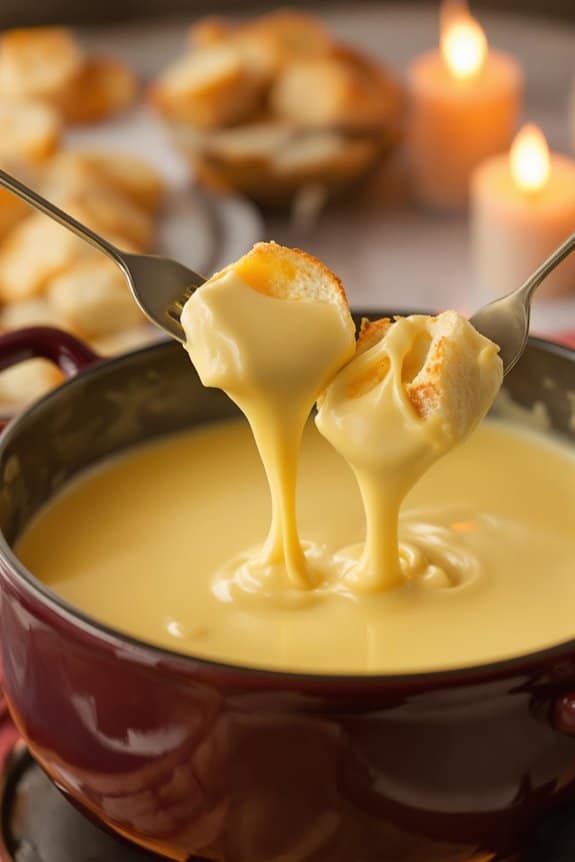
And honestly, what’s not to love about dipping bread into molten cheese? It’s basically adult comfort food at its finest. The whole process feels ceremonial, gathering around that little flame while everyone takes turns stabbing bread cubes.
Sure, you might lose a piece or two in the depths, but that’s just fondue tax. This isn’t complicated cooking – just pure, indulgent simplicity that brings people together naturally.
Ingredients
This recipe keeps things invigoratingly simple with just a handful of quality ingredients. You don’t need to hunt down any exotic items or spend hours prepping, which is exactly what I want when I’m craving that melty cheese goodness. The beauty here lies in letting each ingredient shine without getting fancy.
- 1 garlic clove, halved crosswise
- 1 1/2 cups dry white wine (preferably Swiss, such as Fendant)
- 1 tablespoon cornstarch
- 2 teaspoons kirsch
- 1/2 lb Emmenthaler cheese, coarsely grated
- 1/2 lb Gruyère cheese, coarsely grated
- 1 loaf bread, cut into cubes
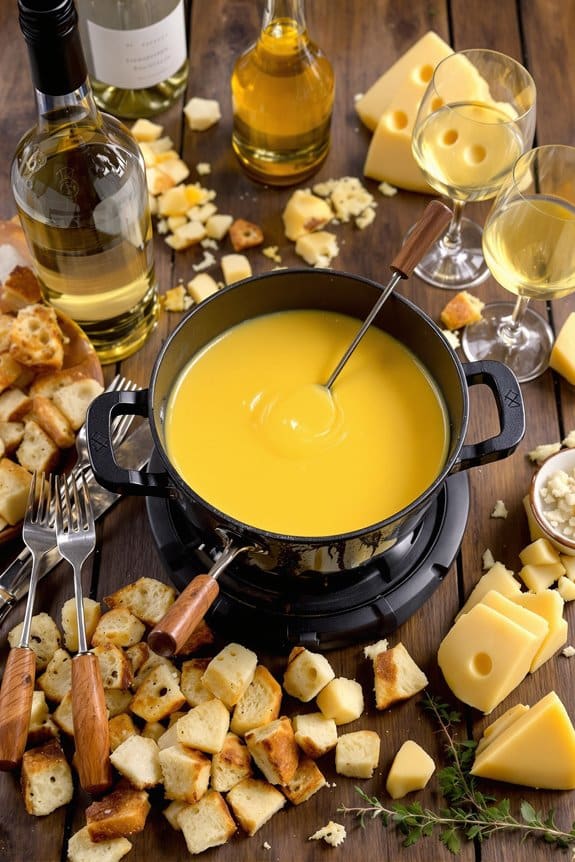
The cheese selection really makes or breaks this dish, so don’t skimp on quality here. Emmenthaler and Gruyère create that perfect nutty, creamy combination that screams authentic Swiss fondue, though I know these can be pricey. If you can’t find Fendant wine, any dry white will work, but avoid anything too sweet or oaky that might compete with the cheese. The kirsch adds a subtle cherry note that’s traditional, but if you’re not a fan of fruit brandies, you could swap it for a bit more wine. As for the bread, go crusty – day-old French bread or sourdough works beautifully because it won’t fall apart when you’re doing all that dipping.
How to Make this Classic Swiss Fondue
Making Swiss fondue isn’t rocket science, but there are a few key moves that’ll save you from ending up with a stringy, separated mess – trust me, nobody wants that kind of kitchen drama.
Start by rubbing the inside of your 4-quart heavy pot with the cut sides of that 1 garlic clove, then toss the garlic because its job is done. Pour in 1 1/2 cups of dry white wine and bring it just to a simmer over moderate heat, not a rolling boil.
While that’s heating up, stir together 1 tablespoon cornstarch and 2 teaspoons kirsch in a small cup, because you’ll need this mixture smooth and ready to go when the time comes.
Here’s where things get real, and this part actually matters more than you might think. Gradually add your 1/2 pound each of coarsely grated Emmenthaler and Gruyère to the simmering wine, stirring constantly in a zigzag pattern – not circular motions, which sounds weird but really does help prevent the cheese from turning into stubborn little balls.
Keep stirring until the cheese melts into creamy perfection, but don’t let it boil or you’ll be dealing with a grainy disaster. Give that cornstarch mixture another stir because it loves to settle, then add it to your fondue.
Bring everything to a simmer and keep stirring for 5 to 8 minutes until it thickens up nicely. Transfer the whole gorgeous mess to your fondue pot, set it over the flame, and grab those bread cubes because you’re about to plunge into some seriously satisfying cheese action. For an even easier experience, consider using an electric fondue pot that maintains the perfect temperature without the hassle of managing an open flame.
Substitutions and Variations
Sometimes you don’t have exactly what the recipe calls for, and that’s perfectly fine because fondue is surprisingly forgiving once you understand the basics.
Can’t find Emmenthaler? I’ll use regular Swiss cheese without hesitation. No Gruyère? Sharp cheddar works beautifully, though it changes the flavor profile. Running low on kirsch? Try brandy or even omit it entirely.
White wine substitutions include dry vermouth or even chicken broth for alcohol-free versions. The key ratio remains one pound cheese to one and a half cups liquid.
Want adventure? I sometimes add herbs, mustard, or garlic powder for personality.
Additional Things to Serve With Classic Swiss Fondue
While bread cubes are the traditional fondue companion, I’d argue they’re just the beginning of what makes a fondue spread truly memorable.
I love adding apple slices—their crisp sweetness cuts through the rich cheese beautifully. Blanched vegetables work wonderfully too: broccoli, cauliflower, and cherry tomatoes all hold up well to dunking.
For something heartier, try cooked baby potatoes or cubed ham. Even cornichons add a delightful tangy crunch that balances the creamy fondue.
The key is offering variety in textures and flavors, so everyone finds their perfect bite.
Final Thoughts
Swiss fondue isn’t just a recipe—it’s an invitation to slow down and savor the moment with people you care about.
When I think about perfect winter nights, this bubbling pot of cheese always comes to mind. Sure, you might drip a little on your sweater or accidentally double-dip, but that’s half the charm.
There’s something magical about gathering around one shared dish, laughing as someone loses their bread cube in the cheese. It’s comfort food that brings people together, creating memories that last long after the last bite disappears.