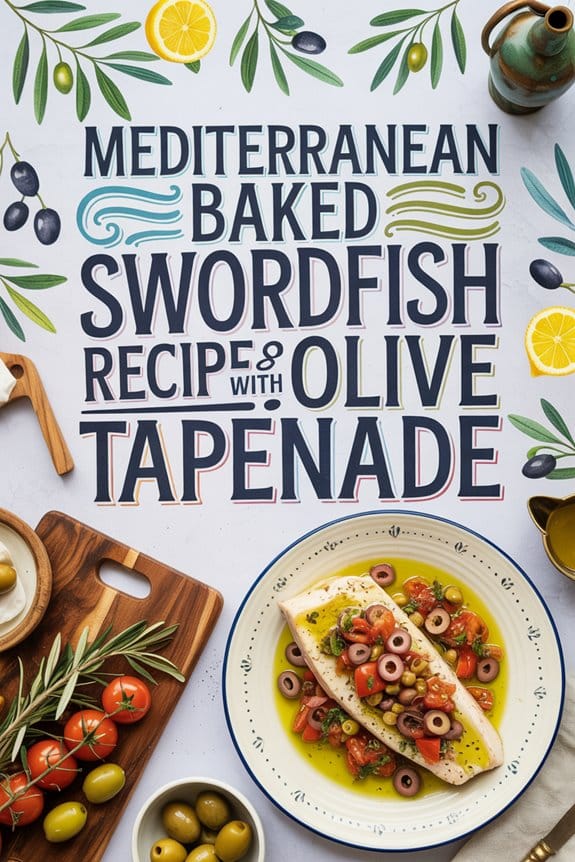
The Simple Joy of this Mediterranean Baked Swordfish with Olive Tapenade
Something magical happens when you combine the meaty richness of swordfish with the bold, briny flavors of the Mediterranean – it’s like the ocean decided to throw a party and invited all its best friends.
I love how this recipe strips away complications, leaving you with pure, honest flavors that sing together.
The olive tapenade practically makes itself while the fish bakes, and honestly, watching that golden transformation happen in your oven feels like witnessing edible alchemy.
Simple ingredients, minimal fuss, maximum flavor – that’s my kind of weeknight dinner magic right there.
Ingredients
You know what I absolutely love about this recipe? The ingredient list is so invigoratingly short that you can probably recite it from memory after reading it once.
We’re talking about the kind of straightforward shopping list that won’t send you wandering through specialty aisles or questioning your life choices in the seafood section. Everything here works together like old friends at a dinner party, each ingredient bringing its own personality to create something that tastes way more sophisticated than the effort required.
- 4 ounces swordfish
- 1/2 cup olives
- 1/2 cup tomatoes
- 1/2 cup onion
- 2 teaspoons olive oil
Now, let’s talk about making these simple ingredients shine, because the devil really is in the details here. For the swordfish, you want a piece that’s about an inch thick so it doesn’t turn into expensive fish jerky while baking.
The olives can be whatever variety makes your heart happy – Kalamata, green, mixed, or that fancy jar you’ve been saving for a special occasion. Fresh tomatoes work beautifully when they’re in season, but don’t stress if you need to grab some decent canned diced tomatoes instead.
As for the onion, a regular yellow onion does the job perfectly, though a sweet onion will add a lovely mellowness if you have one hanging around. The olive oil should be something you’d actually want to taste, not that bottle that’s been lurking in your pantry since 2019.
How to Make this Mediterranean Baked Swordfish with Olive Tapenade
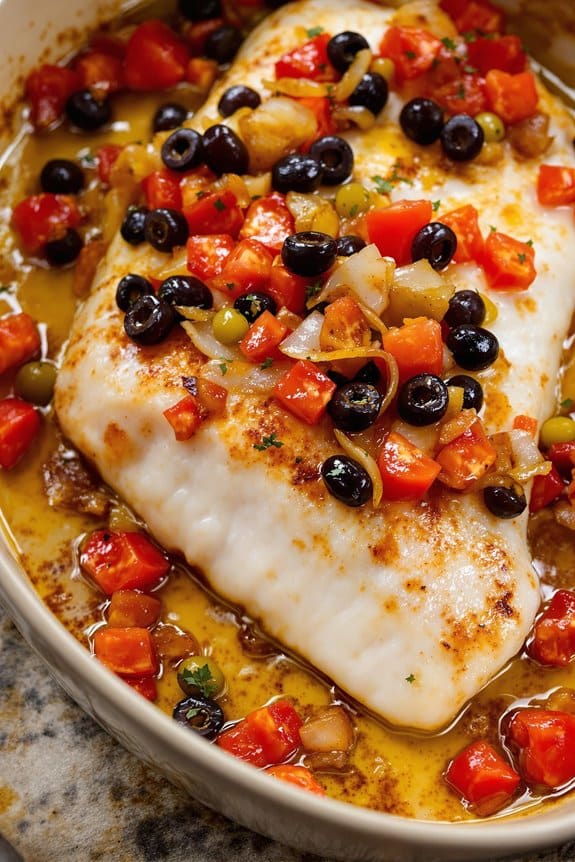
Making this Mediterranean baked swordfish is honestly one of those recipes that makes you feel like a culinary genius while requiring about as much skill as buttering toast. Start by preheating your oven to 350 degrees, then take your 4 ounces of swordfish and place it in a baking dish that’s just the right size – not so big that your fish looks lonely, not so small that everything’s cramped together like passengers on a budget airline.
Now comes the fun part: chopping your vegetables into pieces that are small enough to cook through but big enough that they don’t disappear into oblivion. Dice that 1/2 cup of onion into roughly quarter-inch pieces, chop your 1/2 cup of tomatoes into similar-sized chunks, and if your 1/2 cup of olives are on the larger side, give them a rough chop too.
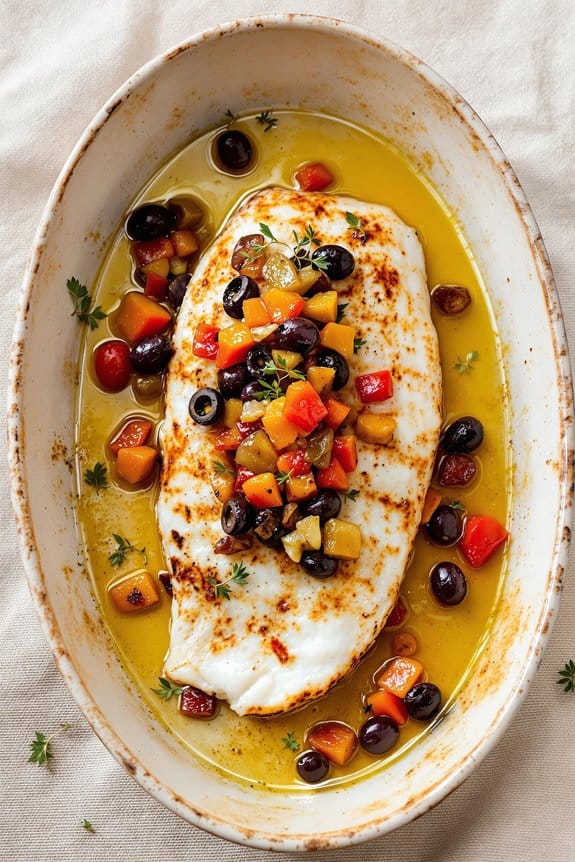
Once you’ve got your vegetable situation sorted, it’s time to create what’s fundamentally a rustic olive tapenade right on top of your fish. Mix together the chopped olives, tomatoes, and onion in a bowl, then pile this colorful mixture right on top of your swordfish like you’re tucking it in for a cozy nap.
Drizzle those 2 teaspoons of olive oil over everything – this isn’t the time to be stingy, as that oil will help everything caramelize beautifully and keep your fish from turning into something resembling shoe leather. For even better results, consider using premium seafood cookware that distributes heat evenly and prevents the delicate fish from sticking to the pan.
Pop the whole thing into your preheated oven and let it bake for 30 minutes, though you’ll want to start checking around the 25-minute mark to see if the fish flakes easily with a fork. The vegetables should be softened and slightly golden, while the fish should be opaque and tender enough that it practically falls apart at your gentle prodding.
Substitutions and Variations
Why stick to the exact recipe when this Mediterranean baked swordfish practically begs for creative interpretation?
I swap swordfish for halibut or mahi-mahi when the market’s selection looks questionable. Can’t find decent olives? I’ll use sun-dried tomatoes instead, doubling the fresh tomatoes for balance.
Red onions add more bite than yellow ones, while shallots bring elegance to dinner parties. Sometimes I throw in capers, fresh herbs like oregano or basil, or even crumbled feta cheese.
The beauty lies in flexibility – this dish adapts to whatever’s lurking in your pantry or calling from the seafood counter.
Additional Things to Serve With Mediterranean Baked Swordfish with Olive Tapenade
After perfecting your swordfish masterpiece, the real magic happens when you build the complete Mediterranean feast around it.
I love pairing this dish with creamy risotto or fluffy couscous to soak up those gorgeous olive juices. Roasted vegetables like zucchini, bell peppers, or eggplant complement the fish beautifully.
A simple arugula salad with lemon vinaigrette cuts through the richness perfectly. Crusty bread, because honestly, who doesn’t need bread?
For wine, I’d choose a crisp Sauvignon Blanc or light Pinot Grigio. The key is keeping everything bright and fresh to match that Mediterranean vibe you’ve created.
Final Thoughts
Since Mediterranean cooking is all about simplicity and letting quality ingredients shine, this swordfish recipe embodies everything I love about this style of cuisine.
The beauty lies in how few ingredients create such bold, satisfying flavors. You’re basically building a party on your plate – meaty swordfish, briny olives, sweet tomatoes, and sharp onions all dancing together.
I find this dish perfect for those nights when I want something impressive but don’t have hours to spend in the kitchen. Simple techniques, quality ingredients, maximum flavor.
Isn’t that what great cooking should be about?