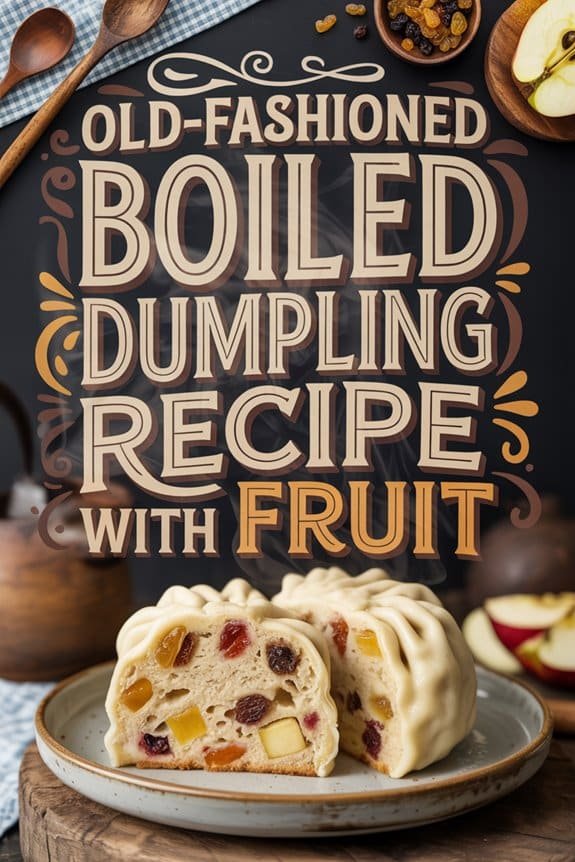
The Simple Joy of these Old-Fashioned Boiled Dumplings with Fruit
Nostalgia hits differently when it comes wrapped in a flour-dusted cloth and bubbling away on your stovetop for hours.
There’s something almost magical about this old-fashioned dumpling – it’s part science experiment, part kitchen therapy. I mean, who doesn’t love the idea of tying up dough in a pillowcase and calling it dinner?
The gentle bubbling sounds, the sweet aroma of cinnamon and fruit filling your kitchen, the anticipation building over those two long hours.
It’s comfort food that demands patience, rewards faith, and somehow tastes like childhood memories you didn’t even know you had.
Ingredients
This dumpling recipe is beautifully old-school, calling for ingredients that might make you pause and wonder if your grandmother’s pantry has infiltrated your shopping list. Most of what you need lives happily in the average kitchen, though you might find yourself explaining to the grocery store clerk what exactly suet is (spoiler alert: you can totally skip it and use shortening instead).
The beauty of this recipe lies in its simplicity – no fancy extracts, no exotic spices, just honest ingredients that somehow transform into something magical when tied up in cloth and boiled for what feels like forever.
- 2 cups flour
- 1 cup chopped suet or 1/2 cup shortening
- 1/2 cup sugar
- 1 cup raisins
- 1 cup currants
- 1 teaspoon baking soda
- 2 teaspoons cinnamon
- 1/2 teaspoon salt
- 1 apple (with skin, for grating)
- 1 carrot (with skin, for grating)
- Water as needed (around 1/2 cup, give or take)
Now, about those ingredients – suet is traditional but honestly, shortening works just fine and saves you from hunting down beef fat at the butcher counter.
The grated apple and carrot add moisture and sweetness that’ll surprise you, so don’t skip the peels since they bring extra flavor and texture. Currants can be tricky to find sometimes, so dried cranberries or even chopped dates work as substitutes.
Make sure your baking soda is fresh because that’s what gives this dense dumpling its lift, and don’t stress about the water measurement too much – you’re looking for sticky dough, not soup.
How to Make these Old-Fashioned Boiled Dumplings with Fruit
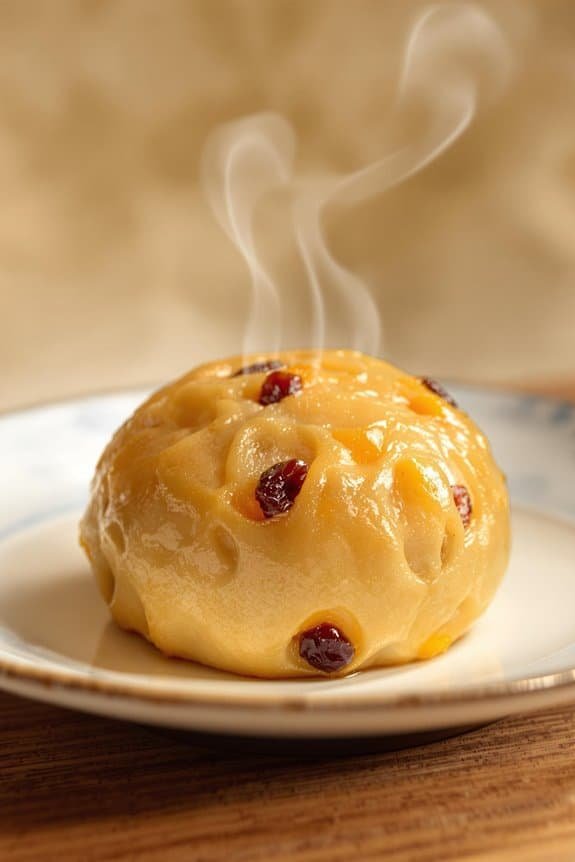
Making this old-fashioned dumpling feels like stepping into a time machine where cooking was equal parts ritual and endurance test. Start by getting a large pot of water going – and here’s your first quirky move: drop a plate in the bottom of that pot to prevent burning, because apparently our ancestors knew something about physics that we forgot.
While that’s heating up, grab a big mixing bowl and combine your dry team: 2 cups flour, 1/2 teaspoon salt, 1 teaspoon baking soda, 1/2 cup sugar, and 2 teaspoons cinnamon. Next comes the 1/2 cup shortening (or 1 cup chopped suet if you’re feeling historically accurate), which you’ll mix in until everything looks like chunky breadcrumbs.
This is where things get interesting – fold in 1 cup raisins, 1 cup currants, plus your freshly grated apple and carrot, skin and all. The mixture will look like a confused fruit salad at this point, but trust the process.
Now comes the part that separates the brave from the bewildered: creating the perfect dumpling dough and its cloth cocoon. Add water bit by bit – start with maybe 1/4 cup and work your way up to that full 1/2 cup – until you’ve got a sticky dough that holds together but isn’t swimming.
While you’re doing this delicate water dance, grab an old pillowcase or large clean cloth, dip just the center in your pot of boiling water, then wring out the excess. Lightly flour that damp spot, dump your sticky dough right onto it, then gather the sides like you’re wrapping the world’s most precious gift.
Leave some room for expansion because this dumpling has growth ambitions, tie it tight with string, and lower it into that bubbling water. For this traditional boiling method, a professional soup pot with heavy-duty construction ensures even heat distribution throughout the long cooking process. Here’s where patience becomes a virtue: you’re looking at a minimum 2 hours of boiling time, checking occasionally to make sure your water level hasn’t gone rogue.
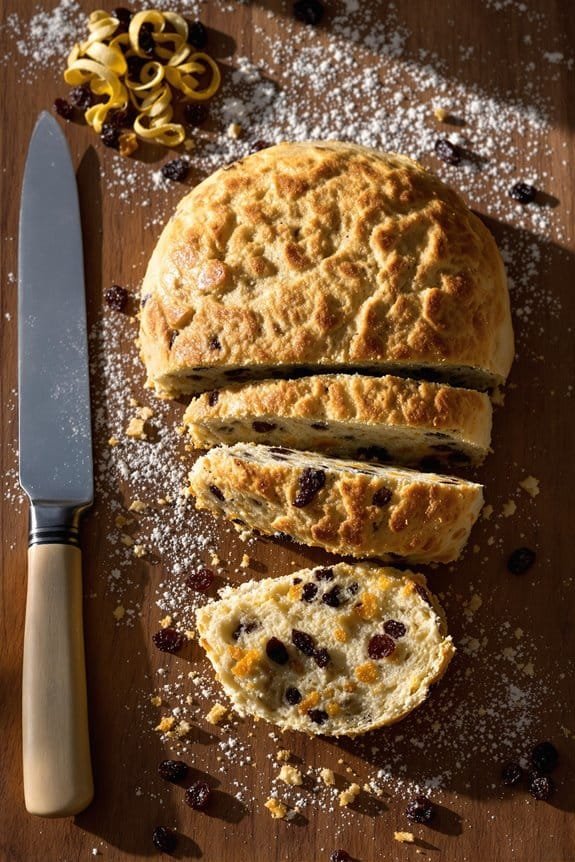
When time’s up, pull out what looks like a very wet, very confused dumpling, pop it into a small roaster, and bake at 350 degrees just until it browns up and dries out a bit – think of it as the dumpling’s final beauty treatment before its big debut.
Substitutions and Variations
While this dumpling recipe reads like it’s carved in stone from generations past, you can absolutely shake things up without offending your great-grandmother’s ghost.
I swap dried cranberries for raisins when I’m feeling fancy, or toss in chopped walnuts for crunch. No suet? Butter works beautifully. Fresh grated ginger adds warmth alongside that cinnamon.
You can even go rogue with the fruit—try grated pear instead of apple, or mix in some orange zest. Want it less sweet? Cut the sugar in half. More festive? Add a splash of rum to your water.
Additional Things to Serve With Old-Fashioned Boiled Dumplings with Fruit
Once you’ve got your golden-brown dumpling cooling on the counter, you’ll want something magical to pour, dollop, or drizzle alongside those tender slices.
I’m partial to warm custard sauce, which transforms each bite into pure comfort. Heavy cream works beautifully too, especially when you add a splash of vanilla.
Hard sauce, that buttery-boozy concoction, makes everything feel festive. Ice cream creates delightful temperature contrast against the warm dumpling.
Caramel sauce adds richness, while lemon curd brings bright tang. Even simple powdered sugar dusting works wonders.
The key is choosing something creamy to balance the dumpling’s hearty sweetness.
Final Thoughts
Although this dumpling might seem like an unusual project for modern kitchens, it’s honestly one of those recipes that’ll surprise you with how satisfying the whole process becomes.
There’s something deeply rewarding about bundling that sticky dough in cloth, watching it bob in boiling water for hours. Sure, it takes patience, but isn’t that what Sunday afternoons are for?
The aroma alone will have your family wandering into the kitchen, asking what smells so incredible. This old-fashioned treat connects us to simpler times when desserts required effort, making each sweet, fruity slice feel absolutely earned.