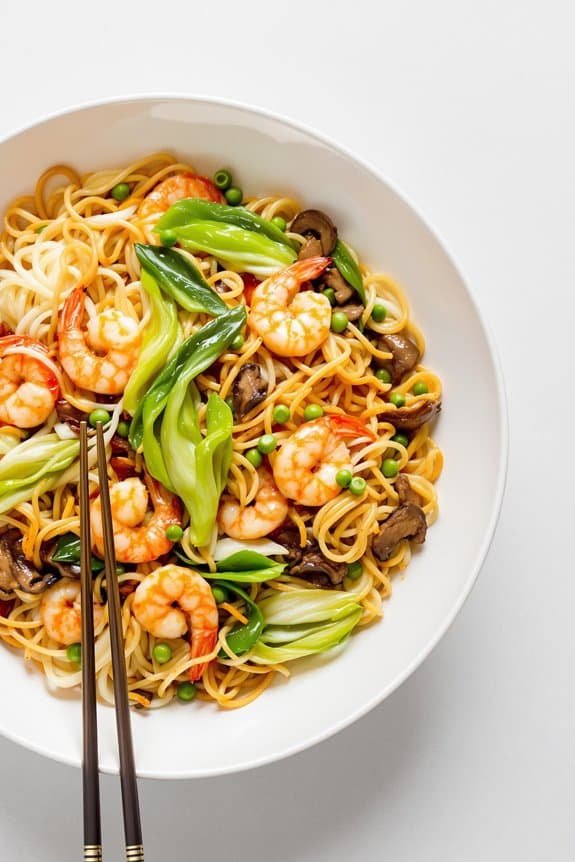
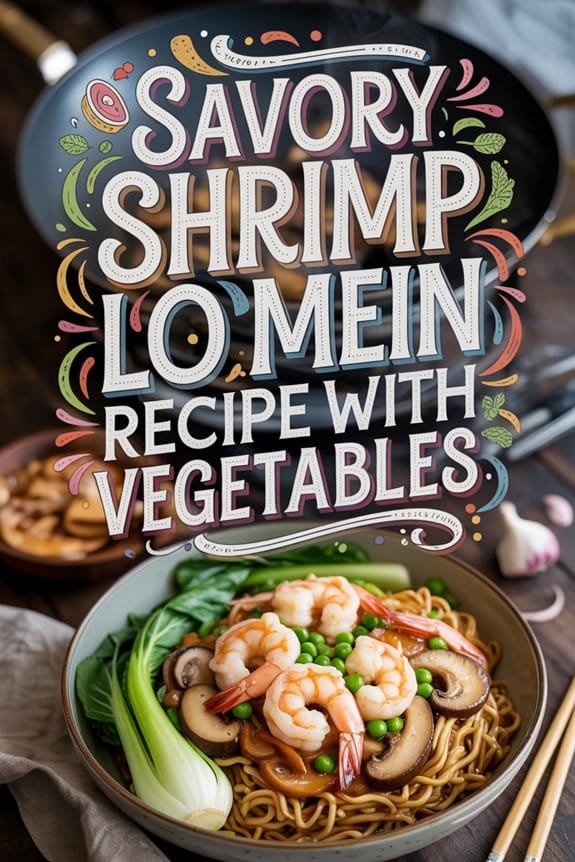
The Simple Joy of this Savory Shrimp Lo Mein
Whether you’re craving something comforting on a busy weeknight or trying to impress someone with your wok skills, this savory shrimp lo mein delivers that perfect balance of tender noodles, plump shrimp, and crisp vegetables that makes takeout seem unnecessary.
I love how this dish transforms simple ingredients into something that feels restaurant-quality. The cornstarch coating keeps the shrimp incredibly tender, while the bok choy adds that satisfying crunch.
What really gets me excited is how the oyster sauce ties everything together with its rich, umami flavor that coats each noodle strand perfectly.
Ingredients
Getting all your ingredients ready for this shrimp lo mein is like setting up for a beautiful dance, everything needs to be prepped and waiting because once that wok gets hot, things move fast.
I always tell people that mise en place isn’t just fancy chef talk, it’s your secret weapon for not burning the garlic while you’re frantically trying to slice mushrooms with one hand.
For the Shrimp:
- 3/4 lb shrimp (fresh or frozen)
- 1 teaspoon cornstarch
- 1/2 teaspoon sesame oil
- 1/4 teaspoon salt
- 1/8 teaspoon white pepper
For the Vegetables:
- 8 ounces bok choy (about 4 large stalks)
- 6 ounces pea pods
- 4 ounces mushrooms
- 2 green onions with tops
- 1 teaspoon fresh gingerroot, chopped
- 1 teaspoon garlic, finely chopped
For the Noodles and Sauce:
- 1 (8 ounce) package Chinese egg noodles
- 3 tablespoons cornstarch
- 3 tablespoons cold water
- 1/4 cup oyster sauce
- 1 cup chicken broth
- 1 teaspoon salt
- 4 tablespoons vegetable oil (divided)
- 1 cup barbecued pork, sliced
For Cooking:
– 2 quarts water (for boiling noodles)
The beauty of this ingredient list is how forgiving it can be when you’re standing in the grocery store wondering if you grabbed the right type of mushrooms.
Button mushrooms work perfectly fine, though shiitakes will give you that extra earthy flavor if you’re feeling fancy.
Don’t stress too much about finding the exact Chinese egg noodles either, fresh lo mein noodles are ideal, but dried ones from the Asian aisle will absolutely do the trick.
And here’s something I wish someone had told me earlier, if you can’t find barbecued pork, leftover roasted chicken or even some crispy tofu will make this dish your own without losing any of that satisfying, hearty feel.
How to Make this Savory Shrimp Lo Mein
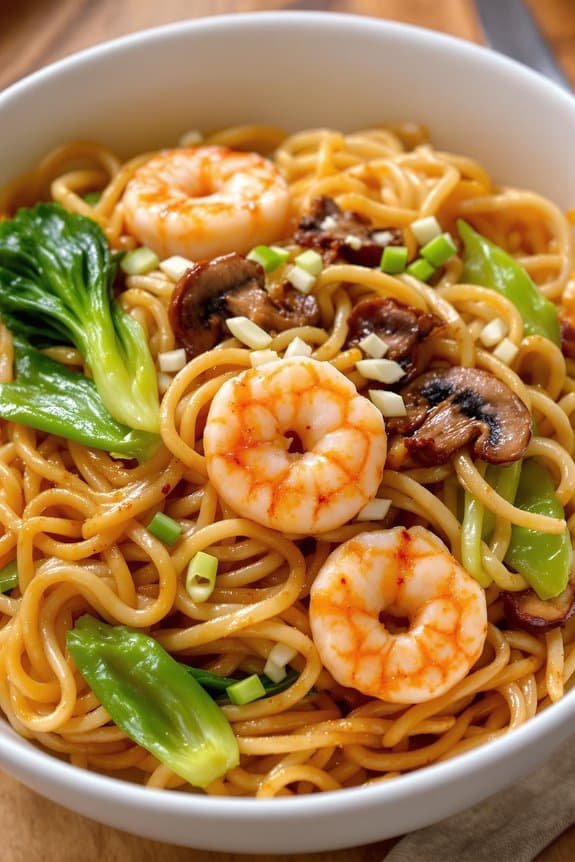
Making this shrimp lo mein feels like conducting an orchestra where timing is everything, and honestly, the first time I attempted it I felt like I was juggling flaming torches while riding a unicycle.
Start by peeling your 3/4 lb shrimp, and if you’re using frozen ones, don’t bother thawing them completely, just peel them under cold running water like the recipe suggests. Make that shallow cut down the back to remove the sand vein, then slice each shrimp lengthwise in half. Toss them with 1 teaspoon cornstarch, 1/2 teaspoon sesame oil, 1/4 teaspoon salt, and 1/8 teaspoon white pepper in a bowl, then let them hang out in the fridge for 20 minutes while you prep everything else. This marinating step is like giving your shrimp a little spa treatment that makes them incredibly tender and flavorful.
While your shrimp are chilling, tackle the vegetables because once that wok gets hot, you’ll need everything within arm’s reach. Separate the bok choy leaves from stems, cutting the leaves into 2-inch pieces and slicing those stems diagonally into 1/4-inch pieces, keeping them separate because they cook at different rates.
Blanch your 6 ounces pea pods in boiling water for just 1 minute, then immediately shock them in cold water to stop the cooking, slice your 4 ounces mushrooms into 1/2-inch pieces, and chop your 2 green onions into 2-inch lengths. Mix 3 tablespoons cornstarch with 3 tablespoons cold water to make your thickening slurry, and get your 2 quarts water boiling for the 8 ounce package Chinese egg noodles, cooking them for about 5 minutes until they’re soft and can be separated easily.
Now comes the fun part, the actual stir-frying, which happens faster than you can say “where did I put the oyster sauce.” Heat your wok until water droplets dance and sizzle when you flick them in, add 2 tablespoons vegetable oil, then toss in your marinated shrimp along with 1 teaspoon chopped gingerroot and 1 teaspoon finely chopped garlic, stir-frying just until the shrimp turn pink.
Remove the shrimp, add another 2 tablespoons oil, then stir-fry those bok choy stems for 1 minute before adding the leaves, mushrooms, 1/4 cup oyster sauce, and 1 teaspoon salt for another minute. Pour in 1 cup chicken broth, bring it to a boil, then stir in that cornstarch mixture and watch everything thicken up like magic in about 10 seconds. A professional soup kettle can handle larger batches if you’re cooking for a crowd or want leftovers for the week.
Finally, add back your shrimp along with the blanched pea pods, green onions, and 1 cup sliced barbecued pork, give everything a good stir for 30 seconds, and serve it over those warm noodles that have been patiently waiting in your 300°F oven.
Substitutions and Variations
This recipe isn’t set in stone, and honestly, that’s where things get really exciting because you can swap ingredients based on what’s hiding in your fridge or what looks good at the market.
No shrimp? I’d use chicken, beef, or tofu instead. Missing bok choy? Napa cabbage works perfectly. Can’t find Chinese egg noodles? Regular spaghetti will do the trick.
Want more heat? Toss in some chili garlic sauce with the oyster sauce. The barbecued pork can become leftover rotisserie chicken, and those pea pods can easily become snap peas or even broccoli florets.
Additional Things to Serve With Savory Shrimp Lo Mein
While shrimp lo mein makes a satisfying meal on its own, I love pairing it with a few strategic side dishes that complement those savory, umami-rich flavors without competing for attention.
Hot and sour soup adds that perfect acidic contrast—trust me, your taste buds will thank you.
Crispy vegetable spring rolls provide textural variety, giving you something crunchy to balance all those tender noodles.
I also recommend steamed pork dumplings if you’re feeling indulgent, or keep things light with cucumber salad dressed in rice vinegar.
These additions turn dinner into a proper feast.
Final Thoughts
After building your perfect spread with all those complementary sides, you’ll have created something truly special in your kitchen tonight.
This lo mein recipe proves that restaurant-quality dishes don’t need fancy equipment or mysterious techniques. Just fresh ingredients, proper timing, and that trusty wok you’ve been meaning to use more often.
The beauty lies in how each component maintains its texture while melding into one cohesive dish. Will your family ask for seconds? Probably. Will you feel like a culinary genius? Absolutely.
Sometimes the best meals are the ones that bring everyone together around simple, honest flavors.